



Investigation of the causal relationship between LGALS8 expression and bronchiectasis based on Mendelian randomization
-
摘要:
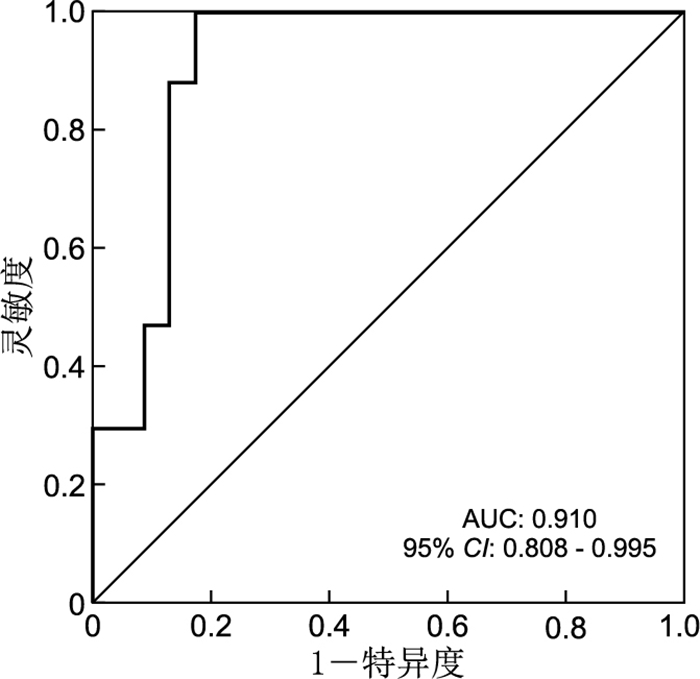
目的 本研究旨在通过孟德尔随机化(MR)分析和临床样本验证,探究半乳糖凝集素8(LGALS8)与支气管扩张症的因果关联。 方法 利用可用药基因的顺式表达数量性状位点(cis-eQTL)数据和蛋白质数量性状位点(pQTL)数据与支气管扩张数据进行孟德尔随机化(MR)分析。收集2021年7—10月广西医科大学第一附属医院临床确诊的34例非囊性支气管扩张患者及23例健康对照者的外周血样本,采用RT-qPCR验证其LGALS8表达水平,并分析在年龄、性别、BMI、吸烟状态、支气管扩张评估与分级指数(BACI)及E-FACED评分分组中的表达差异。 结果 MR分析显示LGALS8基因表达与支气管扩张症风险增加有关(OR=1.122,95% CI:1.030~1.222,P=0.008),LGALS8蛋白表达与支气管扩张症风险增加有关(OR=1.495,95% CI:1.161~1.924,P=0.002),均不存在水平多效性和异质性。RT-qPCR结果显示,与对照组比较,支气管扩张组LGALS8的表达水平显著升高(P<0.001),ROC曲线下面积为0.910(95% CI:0.808~0.995)。LGALS8表达在轻度E-FACED评分与中重度E-FACED评分之间差异有统计学意义(P=0.003)。 结论 LGALS8表达与支气管扩张症存在因果关系,LGALS8在支气管扩张患者群体中表达升高,可能促进疾病的发生发展。 Abstract:Objective To investigate the causal association between galectin-8 (LGALS8) and bronchiectasis using Mendelian randomization (MR) analysis and clinical sample validation. Methods MR analysis was performed using cis-expression quantitative trait locus (cis-eQTL) data of druggable genes, protein quantitative trait locus (pQTL) data, and bronchiectasis datasets. Peripheral blood samples were collected from 34 patients with non-cystic bronchiectasis and 23 healthy controls at the First Affiliated Hospital of Guangxi Medical University between July and October 2021. LGALS8 expression was measured by RT-qPCR and analyzed by age, sex, BMI, smoking status, bronchiectasis assessment of clinical impact (BACI) score, and E-FACED score. Results MR analysis showed that increased LGALS8 gene expression was associated with higher bronchiectasis risk (OR=1.122, 95% CI: 1.030-1.222, P=0.008), as was increased LGALS8 protein expression (OR=1.495, 95% CI: 1.161-1.924, P=0.002). No horizontal pleiotropy or heterogeneity was detected. RT-qPCR showed significantly elevated LGALS8 expression in patients than in controls (P<0.001), with an area under the receiver operating characteristic curve of 0.910 (95% CI: 0.808-0.995). LGALS8 expression also differed significantly between patients with mild and moderate-to-severe E-FACED scores (P=0.003). Conclusion LGALS8 expression was causally associated with bronchiectasis. LGALS8 expression is elevated in patients with bronchiectasis, potentially contributing to the onset and progression of the disease. -
Key words:
- Bronchiectasis /
- LGALS8 /
- Drug target /
- Mendelian randomization
-

图 1 LGALS8预测支气管扩张的ROC曲线
Figure 1. The ROC curve of LGALS8 for predicting bronchiectasis
表 1 支气管扩张症患者与健康受试者基线特征比较(例)
Table 1. Baseline characteristics of patients with bronchiectasis and healthy controls (cases)
组别 例数 年龄(岁) 性别 BMI 吸烟状态 E-FACED 支气管扩张评估与分级指数 < 60 ≥ 60 男性 女性 < 18.5 18.5~24.0 >24.0 曾吸烟者 从未 轻度 中重度 低风险 中高危 支气管扩张患者 34 23 11 7 27 8 22 4 6 28 23 11 26 8 健康者 23 15 8 7 16 2 16 5 3 20 统计量 0.036a 0.718a 1.581b 0.010a P值 0.849 0.397 0.114 0.922 注:a为χ2值,b为Z值。  下载: 导出CSV
表 2 LGALS8基因表达与支气管扩张MR分析结果
Table 2. Mendelian randomization analysis results of LGALS8 gene expression in bronchiectasis
方法 nSNP P值 OR值 95% CI MR Egger 16 0.034 1.161 1.025~1.315 Weighted median 16 0.043 1.126 1.004~1.263 Inverse variance weighted 16 0.008 1.122 1.030~1.222 Simple mode 16 0.127 1.158 0.969~1.383 Weighted mode 16 0.079 1.128 0.995~1.280
下载: 导出CSV
表 3 LGALS8蛋白表达与支气管扩张MR分析结果
Table 3. Mendelian randomization analysis results of LGALS8 protein expression in bronchiectasis
方法 nSNP P值 OR值 95% CI MR Egger 7 0.077 1.627 1.060~2.500 Weighted median 7 0.004 1.501 1.142~1.974 Inverse variance weighted 7 0.002 1.495 1.161~1.924 Simple mode 7 0.268 1.398 0.817~2.392 Weighted mode 7 0.036 1.506 1.117~2.032
下载: 导出CSV
表 4 不同临床特征分组间支气管扩张患者LGALS8表达水平比较
Table 4. Comparison of LGALS8 expression levels in different clinical characteristic subgroup of bronchiectasis patients
项目 例数 LGALS8相对表达水平
[M(P25, P75)]统计量 P值 年龄 124.000a 0.942 <60岁 23 2.774(2.058, 4.290) ≥60岁 11 2.897(1.636, 7.070) 性别 64.000a 0.206 女性 27 2.754(1.698, 4.290) 男性 7 3.044(2.324, 4.581) BMI 0.158b 0.924 <18.5 8 2.764(1.839, 4.330) 18.5~24.0 22 2.836(1.897, 5.172) >24.0 4 2.551(1.686, 5.152) 吸烟状态 57.000a 0.238 从不吸烟 28 2.764(1.721, 4.022) 曾经吸烟 6 3.792(2.258, 5.594) BACI风险分级 102.000a 0.952 低风险 26 2.836(1.897, 4.392) 中高风险 8 2.764(1.845, 4.197) E-FACED分级 49.000a 0.003 轻度 23 2.324(1.636, 3.013) 中重度 11 4.581(2.545, 8.631) 注:a为U值,b为H值。
下载: 导出CSV
-
[1] O'DONNELL A E. Bronchiectasis: a clinical review[J]. N Engl J Med, 2022, 387(6): 533-545. doi: 10.1056/NEJMra2202819 [2] FLUME P A, CHALMERS J D, OLIVIER K N. Advances in bronchiectasis: endotyping, genetics, microbiome, and disease heterogeneity[J]. Lancet, 2018, 392(10150): 880-890. doi: 10.1016/S0140-6736(18)31767-7 [3] CHOTIRMALL S H, CHANG A B, CHALMERS J D. Infection vs inflammation the bronchiectasis "tug of war"[J]. Chest, 2024, 166(5): 928-930. doi: 10.1016/j.chest.2024.06.002 [4] 周敏华, 季兴祖, 陈灵勇. 消痈祛腐生肌汤联合胸腺肽α1治疗肺脾气虚型支气管扩张稳定期的临床研究[J]. 中华全科医学, 2024, 22(1): 126-129. doi: 10.16766/j.cnki.issn.1674-4152.003347Zhou M H, Ji X Z, Chen L Y. Clinical study of Xiaoyong Qufu Shengji Decoction combined with thymosin α1 in the treatmentof bronchodilation in stable stage of lung Qi deficiency type[J]. Chinese Journal of General Practice, 2024, 22(1): 126-129. doi: 10.16766/j.cnki.issn.1674-4152.003347 [5] HUANG J T J, CANT E, KEIR H R, et al. Endotyping chronic obstructive pulmonary disease, bronchiectasis, and the "chronic obstructive pulmonary disease-bronchiectasis association"[J]. Am J Respir Crit Care Med, 2022, 206(4): 417-426. doi: 10.1164/rccm.202108-1943OC [6] CAMPETELLA O, PRATO C A, CARABELLI J, et al. Galectin-8 in the onset of the immune response and inflammation[J]. Glycobiology, 2020, 30(3): 134-142. doi: 10.1093/glycob/cwz077 [7] FERKINGSTAD E, SULEM P, ATLASON B A, et al. Large-scale integration of the plasma proteome with genetics and disease[J]. Nat Genet, 2021, 53(12): 1712-1721. doi: 10.1038/s41588-021-00978-w [8] RICHMOND R C, SMITH G D. Mendelian randomization: concepts and scope[J]. Cold Spring Harb Perspect Med, 2022, 12(1): a040501. DOI: 10.1101/cshperspect.a040501. [9] BIRNEY E. Mendelian randomization[J]. Cold Spring Harb Perspect Med, 2022, 12(4): a041302. DOI: 10.1101/cshperspect.a041302. [10] TAHA A. Neutrophil dysfunction in bronchiectasis: pathophysiological insightsand emerging targeted therapies[J]. Multidiscip Respir Med, 2025, 20(1): 1034. DOI: 10.5826/mrm.2025.1034. [11] CHALMERS J D, MALL M A, NIELSEN K G, et al. Neutrophil-derived biomarkers in bronchiectasis: identifying a common therapeutic target[J]. Eur Respir J, 2025, 66(3). DOI: 10.1183/13993003.00081-2025. [12] PURIĆ E, NILSSON U J, ANDERLUH M. Galectin-8 inhibition and functions in immune response and tumor biology[J]. Med Res Rev, 2024, 44(5): 2236-2265. doi: 10.1002/med.22041 [13] LIU S, YAO S, YANG H, et al. Autophagy: regulator of cell death[J]. Cell Death Dis, 2023, 14(10): 648. DOI: 10.1038/s41419-023-06154-8. [14] 童里, 郑小飞, 顾旺, 等. 细胞自噬在肝细胞肝癌中的研究现状[J]. 中华全科医学, 2023, 21(4): 672-676. doi: 10.16766/j.cnki.issn.1674-4152.002957Tong L, Zheng X F, Gu W, et al. Research status of autophagy in hepatocellular carcinoma[J]. Chinese Journal of General Practice, 2023, 21(4): 672-676. doi: 10.16766/j.cnki.issn.1674-4152.002957 [15] YAMAMOTO H, MATSUI T. Molecular mechanisms of macroautophagy, microautophagy, and chaperone-mediated autophagy[J]. J Nippon Med Sch, 2024, 91(1): 2-9. doi: 10.1272/jnms.JNMS.2024_91-102 [16] ZHANG Y, HUANG W, ZHENG Z, et al. Cigarette smoke-inactivated SIRT1 promotes autophagy-dependent senescence of alveolar epithelial type 2 cells to induce pulmonary fibrosis[J]. Free Radic Biol Med, 2021, 166: 116-127. doi: 10.1016/j.freeradbiomed.2021.02.013 [17] ZHANG Y, ZHANG J, FU Z. Role of autophagy in lung diseases and ageing[J]. Eur Respir Rev, 2022, 31(166). DOI: 10.1183/16000617.0134-2022. [18] WANG L, JIA J, YU X, et al. Molecular mechanism of rapamycin-induced autophagy activation to attenuate smoking-induced COPD[J]. Biochem Biophys Res Commun, 2025, 764: 151819. DOI: 10.1016/j.bbrc.2025.151819. [19] LIU S, CHEN L, SHANG Y. CEACAM5 exacerbates asthma by inducing ferroptosis and autophagy in airway epithelial cells through the JAK/STAT6-dependent pathway[J]. Redox Rep, 2025, 30(1): 2444755. DOI: 10.1080/13510002.2024.2444755. [20] YU Y, SUN B. Autophagy-mediated regulation of neutrophils and clinical applications[J]. Burns Trauma, 2020, 8: tkz001. DOI: 10.1093/burnst/tkz001. [21] SI Y, ZHU J, SAYED H, et al. CD98hc, a novel of galectin-8 receptor, binds to galectin-8 in an N-glycosylation-dependent manner[J]. Acta Biochim Biophys Sin, 2025, 57(5): 749-757. doi: 10.3724/abbs.2024182 [22] XIA B, LU Y L, PENG J, et al. Galactin-8 DNA methylation mediates macrophage autophagy through the MAPK/mTOR pathway to alleviate atherosclerosis[J]. Sci Rep, 2025, 15(1): 603. DOI: 10.1038/s41598-025-08357-9. [23] JIA J, ABUDU Y P, CLAUDE-TAUPIN A, et al. Galectins control MTOR and AMPK in response to lysosomal damage to induce autophagy[J]. Autophagy, 2019, 15(1): 169-171. doi: 10.1080/15548627.2018.1505155 [24] RAMADAN A, CAO Z, HASSAN M, et al. Galectin-8 downmodulates TLR4 activation and impairs bacterial clearance in a mouse model of Pseudomonas aeruginosa Keratitis[J]. J Immunol, 2023, 210(4): 398-407. doi: 10.4049/jimmunol.2200706 [25] BELL S L, LOPEZ K L, COX J S, et al. Galectin-8 senses phagosomal damage and recruits selective autophagy adapter TAX1BP1 to control Mycobacterium tuberculosis infection in macrophages[J]. Mbio, 2021, 12(4): e0187120. DOI: 10.1128/mBio.01871-20.
 点击查看大图
计量
- 文章访问数: 7
- HTML全文浏览量: 3
- PDF下载量: 0
- 被引次数: 0
