Current Issue

2026 Vol. 24, No. 5

General Practice Forum
New opportunities and challenges of ChatGPT in general clinical practice
LI Jiawen, YI Shanye, MA Jingxin, FENG Jia, ZHOU Yiheng, ZHAO Qian, LEI Yi, YUAN Bo, JIA Yu, LIAO Xiaoyang
2026, 24(5): 721-725. doi: 10.16766/j.cnki.issn.1674-4152.004476
18 4
Abstract:
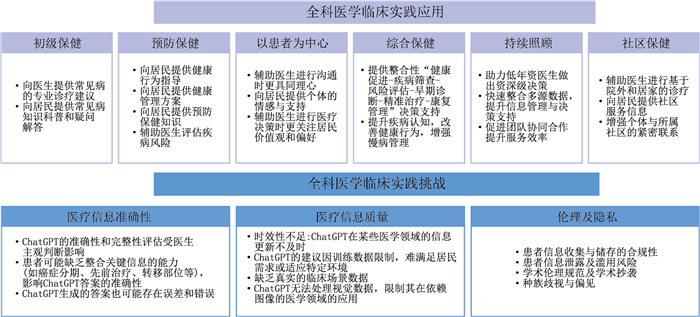
ChatGPT is a large-scale pretrained language model based on GPT-3 launched by OpenAI on November 30, 2022. Owing to its extensive training data and powerful language processing capabilities, ChatGPT demonstrates high accuracy, comprehensiveness, and flexibility in language understanding, showing considerable potential in medical applications, particularly in doctor-patient communication and preventive healthcare. General practice medicine is characterized by the "3P3C" framework, encompassing primary healthcare, preventive healthcare, patient-centered care, comprehensive healthcare, continuous care, and community healthcare. ChatGPT has shown significant potential in these areas, such as providing health information and diagnostic advice, assisting in the development of personalized treatment plans, and supporting chronic disease management. However, the application of ChatGPT also faces many challenges, such as data bias, accuracy limitations, delays in knowledge updates, and ethical and privacy issues, etc. Therefore, future integration of ChatGPT into general practice requires improvements in ethical and legal framework, acceleration of localized deployment, and enhancement of data quality and technological reliability to ensure safe and effective application. Given its potential to improve doctor-patient communication, promote health education, and assist in medical diagnosis in community settings, this study systematically explores the applications and research progress of ChatGPT in the clinical practice, drawing on practical experience and relevant literature in the medical field. It also examines future development trends and provides a preliminary analysis of potential challenges. The broader adoption and implementation of large language models, represented by ChatGPT, may further advance the development of general medicine.
Special Topic/Hypertensive Disorders of Pregnancy
Association of prenatal arsenic exposure with gestational hypertension and preeclampsia
ZHAO Jun, FANG Yuanyuan, SONG Yaping, WANG Wenxin, HUANG Yichao, FAN Yijun
2026, 24(5): 726-729. doi: 10.16766/j.cnki.issn.1674-4152.004477
15 4
Abstract:
  Objective  Based on the clinical characteristics that gestational hypertension (GH) and preeclampsia (PE) belong to the spectrum of hypertensive disorders of pregnancy with progressive disease courses, this study aimed to investigate the associations of urinary arsenic (U-As) and placental arsenic (P-As) exposure during pregnancy with the risk of these two disorders and maternal blood pressure levels, as well as to analyze their dose-response relationships, so as to provide epidemiological evidence for the prevention and control of environmental etiology of hypertensive disorders of pregnancy.  Methods  A 1∶1 matched case-control study was conducted. A total of 70 cases with hypertensive disorders of pregnancy (including 38 GH patients and 32 PE patients, excluding cases related to chronic hypertension) and 70 healthy pregnant women as controls were enrolled, matched by maternal age and gestational week at delivery. Concentrations of U-As and P-As were measured. Multinomial logistic regression analysis and linear mixed model analysis were performed, followed by further dose-response relationship analysis.  Results  The P-As concentration in the case group was significantly higher than that in the control group [6.489 (5.675, 8.073)μg/kg vs. 5.038 (4.312, 5.766) μg/kg, P < 0.001], while no statistically significant difference in U-As levels was observed between the two groups. A significant positive correlation was found between U-As and P-As concentrations (P < 0.05). Multinomial logistic regression analysis indicated that P-As might be an independent risk factor for the onset of GH and PE, whereas U-As only showed a marginal association trend with GH risk. Linear mixed model analysis revealed that both U-As and P-As were significantly positively correlated with systolic blood pressure, diastolic blood pressure and mean arterial pressure. The association effect of P-As was relatively more stable, and a significant increasing dose-response trend was identified between P-As exposure and blood pressure during pregnancy.  Conclusion  Arsenic exposure during pregnancy is associated with the development of hypertensive disorders of pregnancy and changes in maternal blood pressure, with differential effects across different exposure biomarkers. Elevated placental arsenic accumulation is correlated with increased risks of GH and PE, and exerts dose-dependent effects on maternal blood pressure, showing a superior indicative value of in-utero exposure compared with urinary arsenic. Strengthening the prevention of environmental arsenic exposure during pregnancy may contribute to reducing the risk of hypertensive disorders of pregnancy.
Development and validation of a coagulation factor-based risk prediction model for hypertensive disorders of pregnancy
WU Huanyu, WANG Yanyan, ZHANG Xiaodong, CHEN Junhu, WEI Yanxing, WANG Caihong, ZHENG Suijin
2026, 24(5): 730-734. doi: 10.16766/j.cnki.issn.1674-4152.004478
14 1
Abstract:
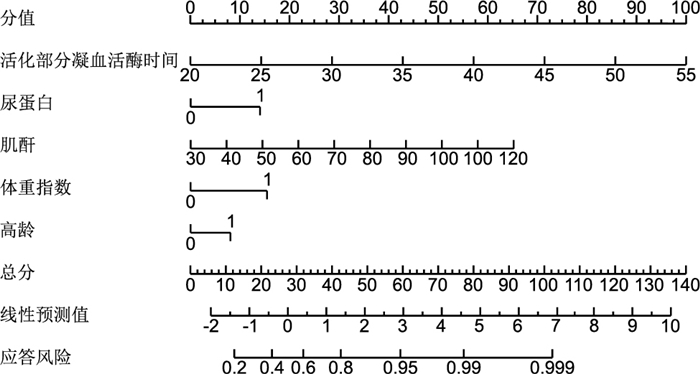
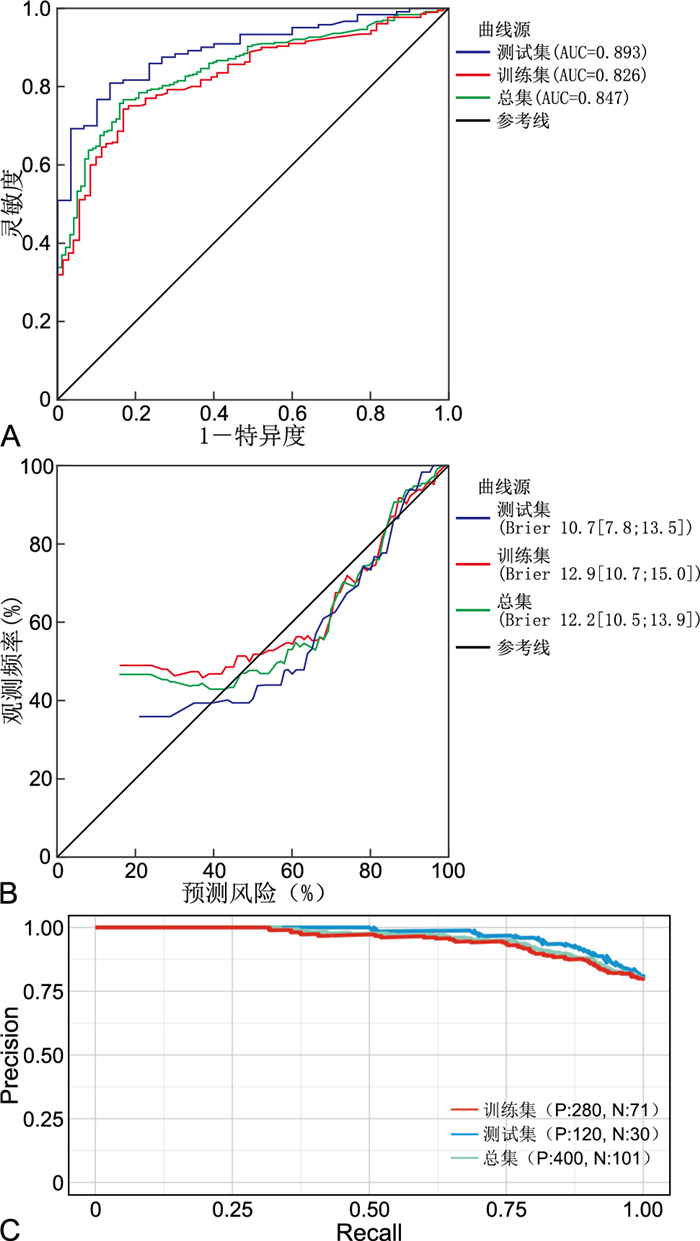
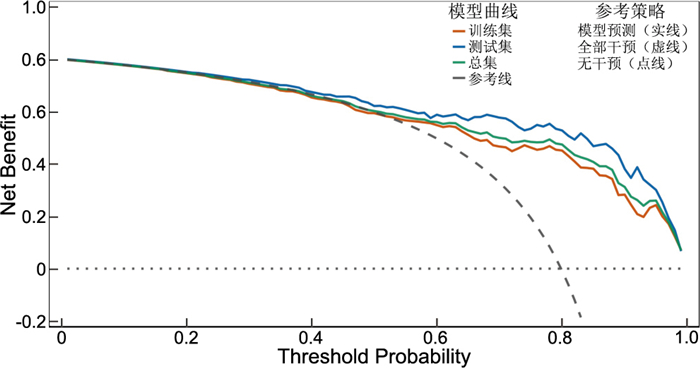
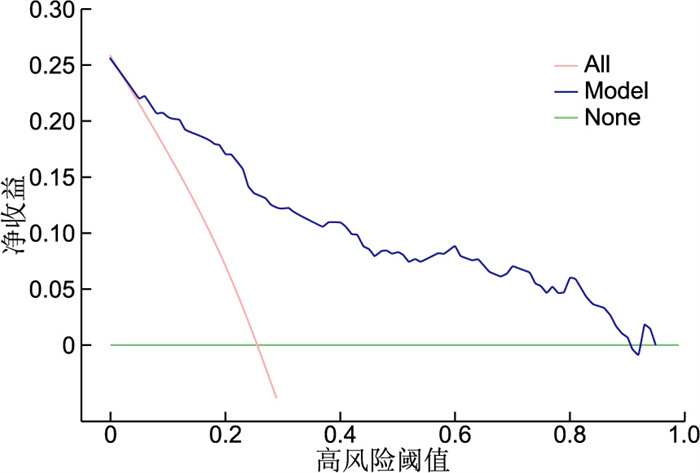
  Objective  To improve the early identification of hypertensive disorders of pregnancy (HDP), this study focused on coagulation function as a potential predictive dimension. We aimed to systematically evaluate the predictive value of coagulation indicators for HDP and to develop a clinically applicable risk assessment model based on these findings.  Methods  A retrospective study included 533 pregnant women admitted to Houjie Hospital, Dongguan from January 2020 to December 2023 (426 in the HDP group and 107 in the non-HDP group). Indicators including coagulation function, renal function, BMI, and age were collected. Predictive factors were screened through univariate and multivariate logistic regression to develop a nomogram model. Model performance was evaluated using receiver operating characteristic (ROC) curves, calibration curves, decision curve analysis (DCA), and precision-recall curves (PR).  Results  Multivariate analysis identified advanced maternal age (≥35 years), BMI ≥25, and proteinuria as independent risk factors for HDP, while elevated activated partial thromboplastin time (APTT) and creatinine were protective factors. The model achieved an area under the ROC curve (AUC) of 0.847 (95% CI: 0.810-0.884), with calibration curves close to the ideal diagonal and DCA demonstrating significant clinical net benefit within the threshold probability range of 0.25-0.75.  Conclusion  The nomogram model incorporating APTT, advanced maternal age, BMI, proteinuria, and creatinine demonstrated good predictive performance for HDP, providing a convenient and economical quantitative tool for early identification of high-risk populations in clinical practice.
A randomized controlled trial of dinoprostone vaginal suppository versus double-balloon catheter for labor induction in term pregnancies with hypertension
LIU Chuang, DU Jianmin, QIN Ge, LUO Xiaohua, HAN Ning
2026, 24(5): 735-738. doi: 10.16766/j.cnki.issn.1674-4152.004479
8 1
Abstract:
  Objective  This study aimed to compare the safety and efficacy of dinoprostone vaginal suppositories and a double-balloon catheter for labor induction in women at term with hypertensive disorders of pregnancy, such as gestational hypertension and non-severe preeclampsia, to inform clinical decision-making.  Methods  This single-center, open-label, randomized controlled trial was conducted at the Third Affiliated Hospital of Zhengzhou University between August 2022 and June 2024. A total of 140 pregnant women diagnosed with gestational hypertension or non-severe preeclampsia at ≥ 37 weeks of gestation were enrolled and randomly assigned to the Dinoprostone group (n=70) or the catheter group (n=70) using a computer-generated randomization sequence.  Results  Successful labor induction was defined as vaginal delivery within 48 hours. The Dinoprostone group demonstrated a significantly higher rate of vaginal delivery within 24 hours compared to the double-balloon catheter group [37 (52.86%) vs. 16 (22.86%), P < 0.001], as well as a higher 48-hour delivery rate [54 (77.14%) vs. 31 (44.29%), P < 0.001]. Among nulliparous women, the dinoprostone group demonstrated significantly shorter time to labor onset [9.00 (3.59, 14.25) h vs. 17.67 (15.67, 19.50) h] and shorter time to vaginal delivery [21.85 (13.02, 31.92) h vs. 27.65 (24.99, 32.18) h] compared to controls (P < 0.05). While overall incidence of adverse events showed no significant differences between groups [16 (22.86%) vs. 11 (15.71%), P=0.284]. However, uterine hyperstimulation occurred more frequently in the dinoprostone group [6 (8.57%) vs. 0, P=0.028].  Conclusion  Dinoprostone vaginal suppositories are more effective than the double-balloon catheter for labor induction in term pregnancies complicated by hypertension, achieving higher delivery rates and shorter induction times with comparable safety. These findings support dinoprostone as a preferable option in this patient population.
General Practice Research
The mediating effect of loneliness on the relationship between alexithymia and sleep quality in patients with atrial fibrillation
YAO Yufei, SUN Guozhen, LI Mingfang, BAO Zhipeng, WANG Lin
2026, 24(5): 739-742. doi: 10.16766/j.cnki.issn.1674-4152.004480
11 2
Abstract:
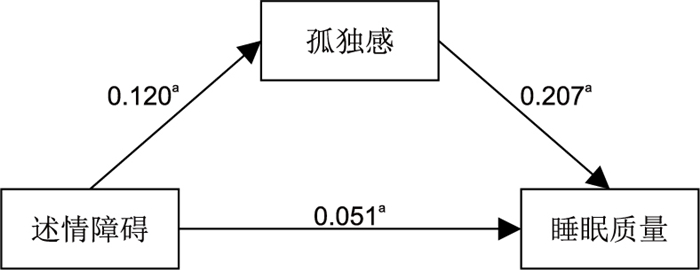
  Objective  To explore the impact of alexithymia on the sleep quality of patients with atrial fibrillation and the mediating role of loneliness in it, with the hope of providing a reference for the sleep management of patients with atrial fibrillation.  Methods  This study employed a convenience sampling method, selecting 300 patients with atrial fibrillation who visited the First Affiliated Hospital of Nanjing Medical University from January to September 2024. A general information questionnaire, the Toronto alexithymia scale-20 (TAS-20), the 6-item loneliness scale (ULS-6), and the Pittsburgh sleep quality index (PSQI) were used for assessment. The PROCESS macro program and the Bootstrap method were utilized for mediating effect analysis.  Results  The study found that patients with atrial fibrillation had poor sleep quality [7.00 (5.00, 11.00) points], were at the borderline level of alexithymia [55.00 (48.00, 61.00) points], and had a mild level of loneliness [13.00 (12.00, 15.00) points]. Patients who were older or of a lower education level had poorer sleep quality. Mediation effect analysis showed that the total effect size was 0.076, with alexithymia having a direct negative impact on sleep quality (effect=0.051), and loneliness partially mediating the impact of alexithymia on sleep quality (effect=0.025). All results were statistically significant (P < 0.05).  Conclusion  Alexithymia is a direct risk factor for sleep quality in patients with atrial fibrillation, and loneliness plays a partial mediating role between alexithymia and sleep quality. Therefore, clinical interventions for patients with atrial fibrillation and alexithymia should consider reducing loneliness to effectively improve sleep quality.
Comparison of therapeutic effects and cumulative remission rates of different treatment regimens for first-episode, treatment IMN
ZHANG Hongchuan, ZHU Huaxia, GUO Kaiqi, XU Xingcheng, LI Xiaowei
2026, 24(5): 743-746. doi: 10.16766/j.cnki.issn.1674-4152.004481
9 1
Abstract:
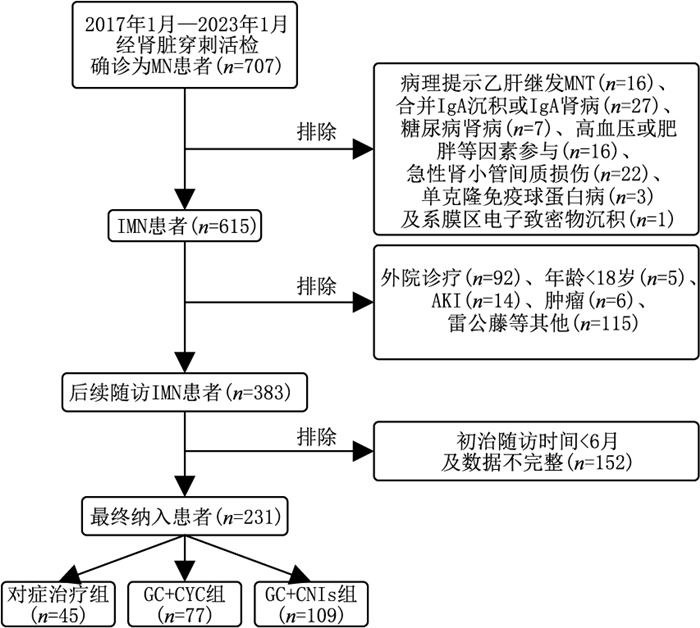
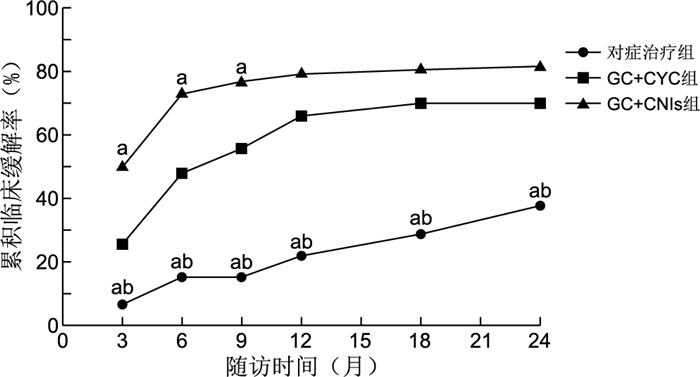
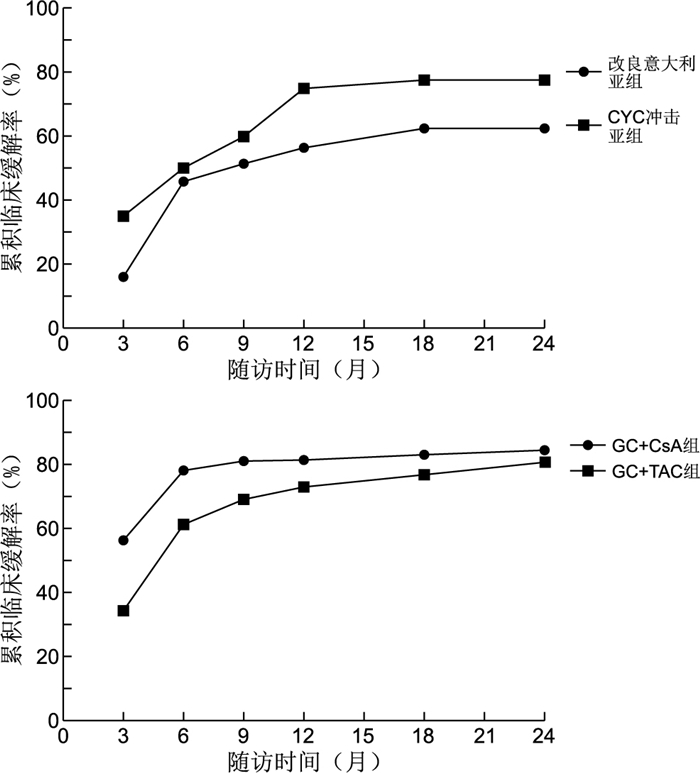
  Objective  This study aimed to compare the clinical efficacy and remission characteristics of three initial therapeutic strategies—symptomatic treatment, glucocorticoid combined with cyclophosphamide (GC+CYC), and glucocorticoid combined with calcineurin inhibitors (GC+CNIs)—and to further analyze subgroup differences and outcomes after treatment switching, thereby providing a reference for individualized clinical management.  Methods  A total of 231 patients with IMN diagnosed at Fuyang People's Hospital of Anhui Medical University from January 2017 to December 2022 were selected as study subjects. According to the initial treatment regimen, they were divided into three groups: symptomatic treatment group (n=45), GC+CYC group (n=77), and GC+CNIs group (n=109). Clinical efficacy and remission outcomes were compared among groups.  Results  The overall clinical remission rate of IMN patients was 59.74% (138/231), among which the partial remission rate was 24.24% (56/231) and the complete remission rate was 35.50% (82/231). The overall clinical remission rates in the symptomatic treatment, GC+CYC group, and GC+CNIs group were 40.00% (18/45), 59.74% (46/77), and 67.89% (74/109), respectively, with no significant difference between the latter two groups (P>0.05). At follow-up, cumulative clinical remission rates were significantly higher in the GC+CYC group and the GC+CNIs group than in the symptomatic treatment group (P < 0.05). The GC+CNIs group had significantly higher cumulative clinical remission rates than the GC+CYC group at 3, 6, and 9 months (P < 0.05). No significant differences in efficacy were observed between the modified Italian subgroup and the CYC shock subgroup, or between the cyclosporine A subgroup and the tacrolimus subgroup (P>0.05). There was no significant difference in the efficacy of patients who switched from the symptomatic treatment group to the immunosuppressive group compared with patients receiving initial CYC or CNIs.  Conclusion  Although no significant difference in efficacy was observed between the CYC regimen and the CNIs-based regimen, CNIs regimen demonstrated a more rapid therapeutic effect. Subgroup analyses showed comparable efficacy across regimens, and treatment switching may partially improve remission outcomes.
Epidemiologic characteristics and influencing factors of lung infection after radiotherapy for nasopharyngeal carcinoma
LI Yunnannan, WENG Jingjin, LI Xiang, XU Huan, HUANG Xiaoyan, LU Weisi, WU Suiyu, SHEN Yan
2026, 24(5): 747-749. doi: 10.16766/j.cnki.issn.1674-4152.004482
11 1
Abstract:
  Objective  Patients with nasopharyngeal carcinoma (NPC) have a high incidence of pulmonary infection after chemoradiotherapy, which seriously affects their quality of life and prognosis. However, relevant literature reports on this issue are scarce. Therefore, this study aims to analyze the epidemiological characteristics and risk factors of pulmonary infection in NPC patients following chemoradiotherapy, so as to provide a reference for early assessment, prevention, and targeted nursing interventions.  Methods  A retrospective analysis was performed on the clinical data of 1 033 nasopharyngeal carcinoma patients who met the indications for chemoradiotherapy and were admitted to the People's Hospital of Guangxi Zhuang Autonomous Region from January 2019 to December 2023. The patients were divided into group A (299 cases) with pulmonary infection and group B (734 cases) without pulmonary infection. Univariate analysis and multivariate logistic regression analysis were conducted to explore the influencing factors of pulmonary infection in nasopharyngeal carcinoma patients after chemoradiotherapy.  Results  The incidence of pulmonary infection was 28.94% among 1 033 enrolled patients. Logistic regression analysis revealed that age (OR=1.028), smoking history (OR=2.526), body mass index (BMI, OR=0.906), tumor recurrence status (OR=0.085), targeted therapy (OR=0.540) and plasma Epstein-Barr virus DNA load (OR=19.616) were influencing factors for pulmonary infection.  Conclusions  The incidence of pulmonary infection is relatively high in nasopharyngeal carcinoma patients after radiotherapy and chemotherapy. Advanced age, smoking history, low BMI, non-recurrent tumor, absence of targeted therapy and elevated plasma Epstein-Barr virus DNA level are associated with increased risk of pulmonary infection. It is recommended that early assessment targeting these risk factors be conducted for these patients. For high-risk ones, increased monitoring frequency and enhanced respiratory care should be implemented to reduce the risk of concurrent pulmonary infection.
Diagnostic value of combined detection of three serum markers in cardiac autonomic neuropathy in type 2 diabetes
PENG Shaolin, LU Xiaoyu, YANG Jingjin, ZHANG Ling, PENG Nianchun, YANG Shuibing
2026, 24(5): 750-754. doi: 10.16766/j.cnki.issn.1674-4152.004483
11 1
Abstract:
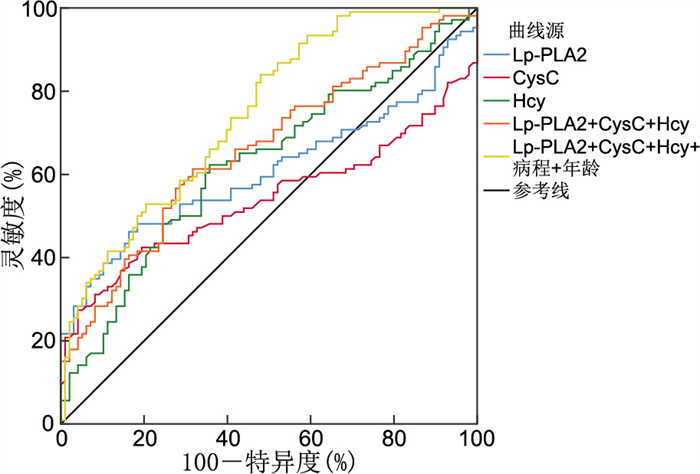
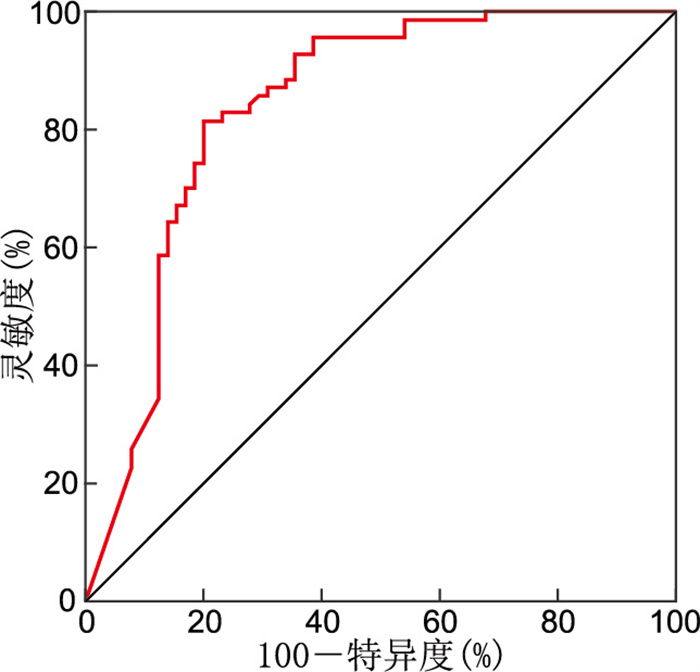
  Objective  To explore the diagnostic value of combined detection of lipoprotein-associated phospholipase A2 (Lp-PLA2), cystatin C (CysC), and homocysteine (Hcy) in cardiac autonomic neuropathy in type 2 diabetes mellitus (DCAN) to assess whether it is superior to each indicator alone.  Methods  A total of 204 inpatients diagnosed with type 2 diabetes mellitus admitted to the Department of Endocrinology and Metabolism at Hunan University of Medicine General Hospital between December 2021 and January 2023 were retrospectively. All patients were divided into the DCAN group (n=106) and the non-DCAN group (n=98). General patient information was recorded, and biochemical indices such as Lp-PLA2, CysC, and Hcy were measured in each group. Spearman correlation analysis was employed to assess the relationships among Lp-PLA2, CysC, Hcy, and DCAN. Multivariate logistic regression analysis was performed to investigate the potential risk factors associated with DCAN. The receiver operating characteristic (ROC) curve was utilized to analyze the predictive value of the combined indices in DCAN.  Results  The concentrations of Lp-PLA2, CysC, and Hcy were all elevated in the DCAN group compared to those in the non-DCAN group (P < 0.05). Spearman correlation analysis indicated that Lp-PLA2, CysC, and Hcy were positively correlated with DCAN (rs=0.816, P=0.040; rs= 0.713, P=0.020; rs=0.676, P < 0.001). ROC analysis showed that the areas under the curves for Lp-PLA2, CysC, and Hcy were 0.607 (P=0.008), 0.540 (P=0.019), and 0.625 (P=0.002), respectively. The AUC for the combined detection of the three biomarkers was 0.745 (95% CI: 0.679-0.811, P < 0.001), exhibiting a sensitivity of 80.1% and a specificity of 70.5%.  Conclusion  Lp-PLA2, CysC, and Hcy were identified as independent risk factors for DCAN. Combined detection of these biomarkers demonstrates moderate diagnostic value and may improve the identification in the diagnosis of DCAN.
Risk factors of respiratory muscle dysfunction in patients with adolescent idiopathic scoliosis
YANG Xianzhu, CHEN Lianlian, HE Mengsi, WANG Xiangyang
2026, 24(5): 755-758. doi: 10.16766/j.cnki.issn.1674-4152.004484
8 1
Abstract:
  Objective  To investigate the respiratory muscle dysfunction in patients with adolescent idiopathic scoliosis, analyze the risk factors, and propose targeted intervention measures.  Methods  A total of 80 patients with adolescent idiopathic scoliosis admitted to the Second Affiliated Hospital of Wenzhou Medical University from January 2021 to December 2024 were studied. After admission, general data such as gender and age were obtained by querying electronic medical records and face-to-face inquiries. According to whether respiratory muscle dysfunction occurred, 80 patients were divided into the occurrence group and the non-occurrence group. Univariate and multivariate logistic regression analyses were used to screen the risk factors of respiratory muscle dysfunction in patients with adolescent idiopathic scoliosis. Targeted nursing strategies were provided based on high-risk factors.  Results  Among 80 patients with adolescent idiopathic scoliosis, 29 cases had respiratory muscle dysfunction and were classified as the occurrence group. The incidence rate of respiratory muscle dysfunction was 36.25% (29/80). Multivariate analysis showed that large Cobb angle, learning dance, and respiratory training non-compliance were risk factors of respiratory muscle dysfunction in patients with adolescent idiopathic scoliosis (P < 0.05).  Conclusion  For patients with adolescent idiopathic scoliosis, the occurrence risk of respiratory muscle dysfunction is still high, and the status quo is not optimistic. Large Cobb angle, learning dance, and respiratory training non-compliance are risk factors leading to respiratory muscle dysfunction in patients with adolescent idiopathic scoliosis. Targeted rehabilitation nursing strategies based on high-risk factors are expected to reduce the incidence rate of respiratory muscle dysfunction.
The influencing factors and development of a prediction model for postoperative enteral nutrition intolerance in colorectal cancer
GU Rong, SHEN Ruting, JIANG Lu, YANG Yang, YE Xianghong, HUANG Xiaopeng
2026, 24(5): 759-763. doi: 10.16766/j.cnki.issn.1674-4152.004485
11 1
Abstract:
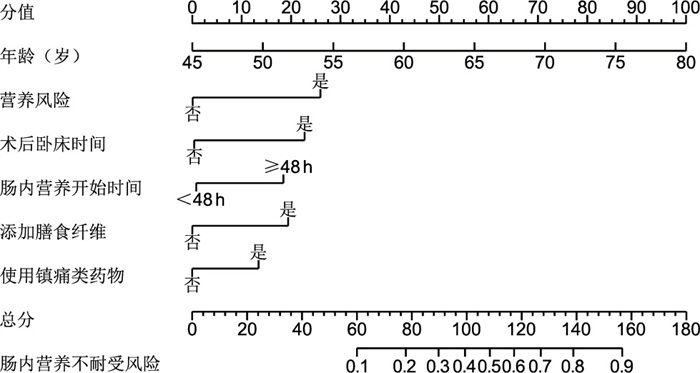
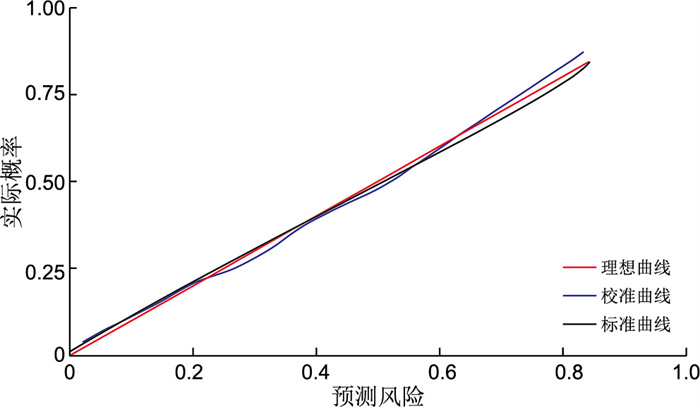
  Objective  To develop a nomogram for predicting the risk of enteral nutrition intolerance after colorectal cancer surgery and to preliminarily validate the predictive performance.  Methods  A retrospective analysis was conducted on 185 colorectal cancer patients who underwent surgical treatment at the General Hospital of Eastern Theater Command from January 2021 to June 2024. All patients received postoperative enteral nutrition support. Based on the presence of intolerance symptoms, patients were divided into the tolerance group (n=129) and the intolerance group (n=56). The clinical data of the two groups were collected, including demographic indicators, colorectal cancer conditions, surgical data, and postoperative enteral nutrition-related conditions. Multivariate logistic regression analysis was used to identify the influencing factors for postoperative enteral nutrition intolerance. A nomogram prediction model was then constructed based on these factors. The discrimination and calibration of the model were verified by the receiver operating characteristic (ROC) curve and calibration curve.  Results  Advanced age, presence of nutritional risk, postoperative bed rest time ≥ 3 days, initiation of enteral nutrition ≥ 48 hours, and use of analgesic drugs were identified as risk factors for postoperative enteral nutrition intolerance, while dietary fiber supplementation was a protective factor. A nomogram model incorporating these variables was developed. The model demonstrated good discrimination, with a C-index of 0.808. The calibration curves showed good agreement between predicted and observed outcomes. The AUC for the nomogram predicting postoperative enteral nutrition intolerance in colorectal cancer was 0.823 (95% CI: 0.760-0.885), indicating satisfactory predictive efficacy.  Conclusion  The nomogram prediction model constructed based on influencing factors such as age and nutritional risk demonstrates good discrimination and consistency, and can serve as an effective tool for predicting postoperative enteral nutrition intolerance in colorectal cancer patients.
Construction and validation of a predictive model for reduced bone mass in adolescent idiopathic scoliosis
HUANG Wei, ZHENG Longlong, LYU Renyu
2026, 24(5): 764-768. doi: 10.16766/j.cnki.issn.1674-4152.004486
12 2
Abstract:
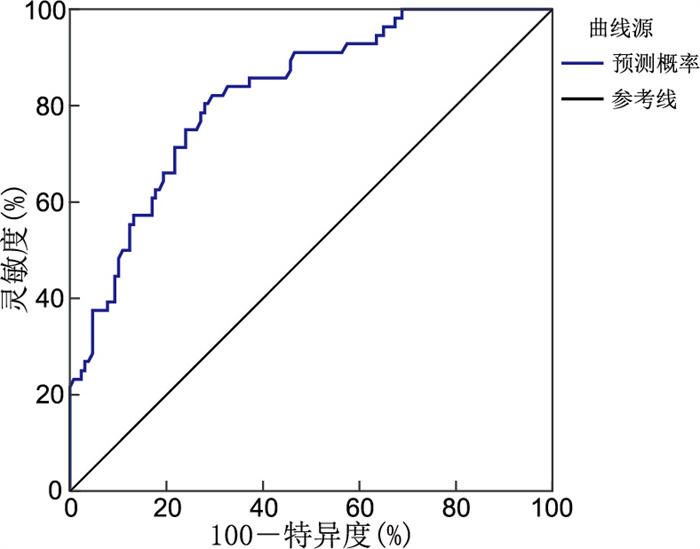
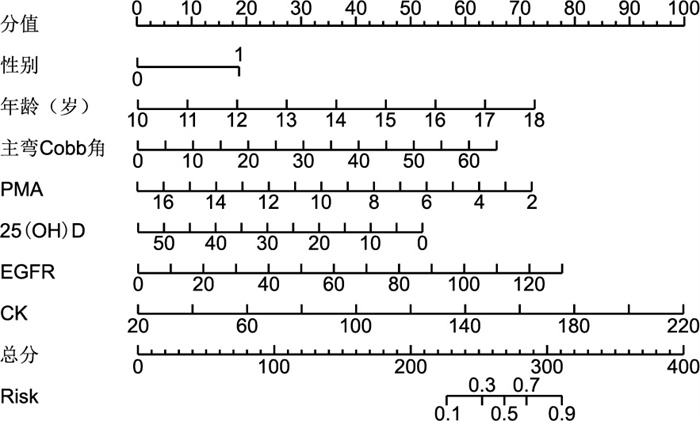
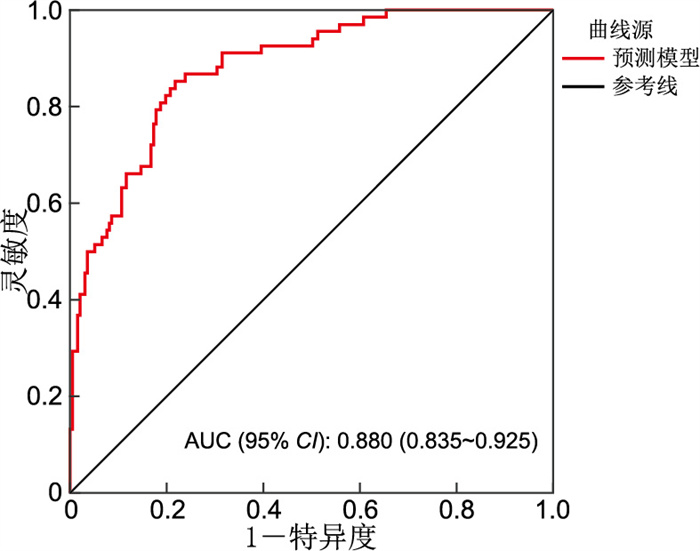
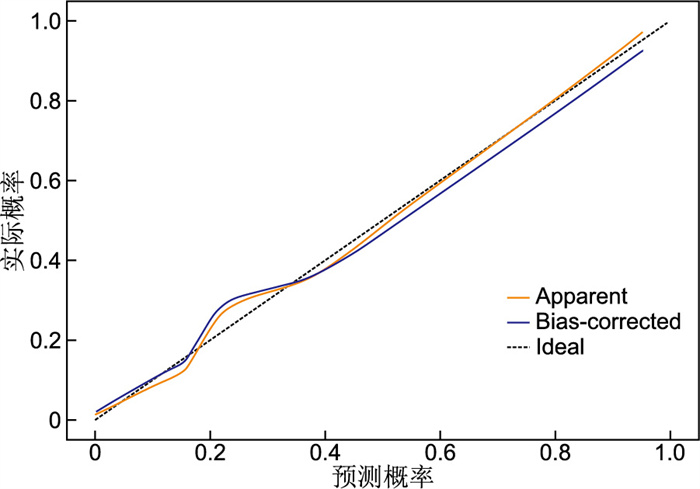
  Objective  To explore the influencing factors of reduced bone mass reduction in adolescents with idiopathic spinal curvature (AIS) and to develop and validate a nomogram prediction model.  Methods  A total of 265 patients with AIS treated at the First People's Hospital of Chuzhou from February 2022 to October 2025 were selected. They were divided into the normal bone mass group (197 cases) and the reduced bone mass group (68 cases) based on lumbar bone density. Multivariate logistic regression analysis was used to identify independent predictors and construct a nomogram. The performance of the model was evaluated through ROC curve, calibration curve and decision curve analysis (DCA).  Results  Multivariate analysis showed that female (OR=2.663, P=0.019), increasing age (OR=1.613, P < 0.001), increase in the Cobb angle of the main curve (OR=1.049, P=0.019), elevated epidermal growth factor receptor (EGFR) level (OR=1.026, P=0.027), and elevated creatine kinase (CK) level (OR=1.026, P < 0.001) are risk factors for bone loss. An increase in the cross-sectional area of paravertebral muscles (PMA, OR=0.797, P=0.007) and elevated 25-hydroxyvitamin D [(25(OH)D] level (OR=0.949, P=0.038) are protective factors. The model demonstrated good discrimination, with an area under the ROC curve (AUC) of 0.880 (95% CI: 0.835-0.925). Calibration was satisfactory, as indicated by the Hosmer-Lemeshow test (χ2=8.510, P=0.385). DCA showed a favorable net clinical benefit across threshold probabilities of 0.1-0.6.  Conclusion  The nomogram incorporating gender, age, main curvature Cobb angle, PMA, 25(OH)D, EGFR, and CK demonstrates good discrimination, calibration, and clinical practicability. It may serve as a visual tool for early risk assessment and intervention for reduced bone mass in AIS patients.
General Clinical Research
Correlation between abnormalities in the Wnt/β-catenin signaling pathway and the therapeutic effect of Qushi Jianfa Decoction in seborrheic alopecia
QIU Chu, CHEN Caifei, CHEN Xiao, ZHU Xiaoyan, CAI Luwei
2026, 24(5): 769-772. doi: 10.16766/j.cnki.issn.1674-4152.004487
10 2
Abstract:
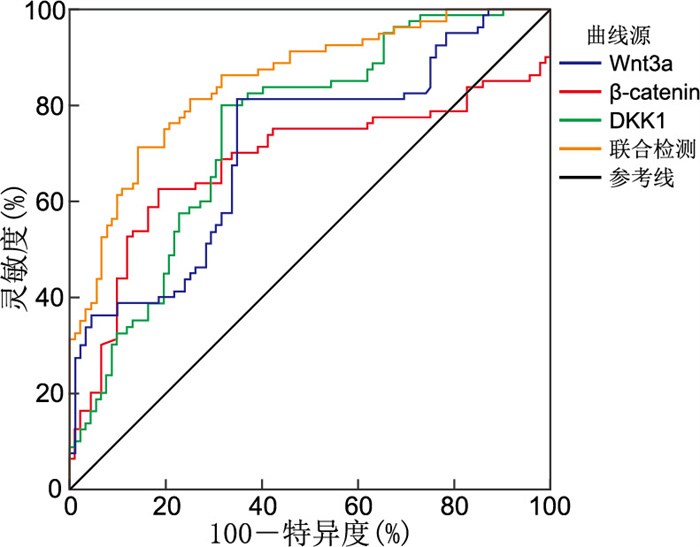
  Objective  To investigate the abnormal expression of key molecules (Wnt3a, β-catenin, DKK1) in the Wnt/β-catenin signaling pathway in patients with seborrheic alopecia and to evaluate their correlation with the therapeutic efficacy of Qushi Jianfa Decoction, as well as their predictive value.  Methods  A total of 120 patients with seborrheic alopecia admitted to Shaoxing Hospital of Traditional Chinese Medicine between August 2024 and August 2025 were selected and randomly assigned using a random number table into the study group (n=60) and the positive control group (n=60), 100 healthy individuals undergoing physical examinations were selected as the control group. Serum levels of Wnt3a, β-catenin, and DKK1 were measured in all three groups. Patients were further stratified into an effective subgroup (n=49) and an ineffective subgroup (n=11) based on treatment efficacy. Statistical analyses included two-column correlation analysis, multivariate logistic regression, and ROC curve analysis.  Results  The treatment group and the positive control group exhibited lower levels of Wnt3a [(35.62±8.94) pg/mL, (36.29±9.12) pg/mL] and β-catenin [(2.15±0.68) ng/mL, (2.31± 0.81) ng/mL] compared to the control group [(58.73±10.25) pg/mL, (3.82±0.95) ng/mL], while DKK1 [(189.35±32.67) pg/mL, (187.71±33.16) pg/mL] was higher than in the control group [(102.46±25.38) pg/mL, F=153.378, 96.853, 228.845, all P < 0.001]. In the treatment group, Wnt3a and β-catenin levels increased, while DKK1 decreased after therapy (P < 0.05). Wnt3a and β-catenin showed positive correlations with therapeutic efficacy, whereas DKK1 exhibited a negative correlation (P < 0.001). A disease course of ≥3 years, severe alopecia, elevated pre-treatment DKK1 level, decreased pretreatment Wnt3a level, and decreased pre-treatment β-catenin level are independent risk factors for the efficacy of Qushi Jianfa Decoction (P < 0.05); whereas elevated pre-treatment Wnt3a level and elevated pre-treatment β-catenin level are independent protective factors for the efficacy of Qushi Jianfa Decoction (P < 0.05). The combined detection of Wnt3a, β-catenin, and DKK1 demonstrated optimal predictive performance (AUC=0.850).  Conclusion  Seborrheic alopecia exhibits abnormalities in the Wnt/β-catenin pathway, with its key molecules closely associated with disease severity and the therapeutic efficacy of Qushi Jianfa Decoction.
Construction and application of a prediction model for major adverse cardiac events in patients with type 2 diabetes based on three-dimensional speckle tracking imaging parameters combined with serum 3-NT and vaspin
SHEN Lele, WANG Rongjin, QIN Tingting, SHEN Yuanliang, MAO Xiaomin, LI Xiujuan
2026, 24(5): 773-777. doi: 10.16766/j.cnki.issn.1674-4152.004488
12 2
Abstract:
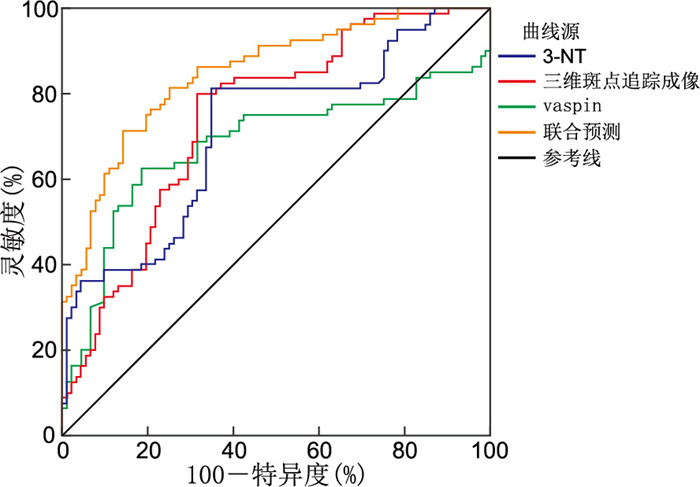
  Objective  To construct a risk prediction model for major adverse cardiac events (MACE) in patients with type 2 diabetes mellitus using three-dimensional speckle tracking imaging (3D-STI) parameters combined with serum 3-nitrotyrosine (3-NT) and abdominal fatty serine protease inhibitor (vaspin), and to explore the predictive value of this model for MACE in patients.  Methods  A total of 118 patients with type 2 diabetes mellitus who were treated in Huzhou Hospital of Traditional Chinese Medicine from December 2020 to December 2021 were selected and divided into 96 cases in the non-MACE group and 22 cases in the MACE group according to the follow-up results. Echocardiography and 3D-STI examinations were performed in both groups to detect the levels of serum 3-NT and vaspin. Pearson correlation analysis was used to analyze the association between indicators, and multivariate logistic regression analysis was conducted to analyze the risk factors for MACE occurrence.  Results  Compared with the MACE group, the levels of early diastolic peak blood flow velocity at the mitral orifice/early diastolic peak movement velocity of the mitral annulus (E/e ') and 3-NT[(52.78±6.49) ng/mL vs. (40.36±5.33) ng/mL] in the MACE group increased. The levels of 2D left ventricular global long-axis strain (2D-GLS), 3D-GLS, and vaspin[(0.23±0.03) ng/mL vs. (0.41±0.05) ng/mL] decreased (P < 0.05). E/e 'was positively correlated with 3-NT and negatively correlated with vaspin. Multivariate logistic regression analysis showed that low 2D-GLS level, low 3D-GLS level, and high 3-NT level were independent risk factors for MACE (P < 0.05), while low vaspin level was an independent protective factor for MACE (P < 0.05). The combined predictive efficacy of 3-NT, vaspin, and 3D-STI was higher than that of a single detection (P < 0.05).  Conclusion  The construction of a prediction model combining 3D-STI parameters with serum 3-NT and vaspin can evaluate the risk of MACE in patients with type 2 diabetes.
Mediating effect of health literacy on the relationship between social support and treatment compliance of periodontal disease patients
HE Ruanhui, REN Manman, ZHU Yesu
2026, 24(5): 778-781. doi: 10.16766/j.cnki.issn.1674-4152.004489
8 1
Abstract:
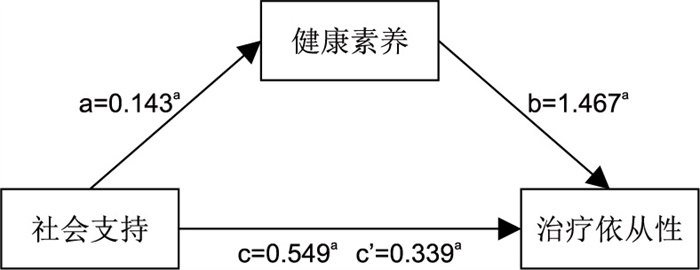
  Objective  Periodontal disease, as a prevalent chronic oral condition, requires long-term standardized treatment adherence from patients for optimal therapeutic outcomes. This study aims to explore the mediating effect of health literacy on the relationship between social support and treatment compliance in patients with periodontal disease, in order to reveal the underlying pathways through which social support influences adherence. The findings are expected to provide a theoretical basis for developing targeted clinical interventions, enhancing treatment compliance, and improving prognosis in this patient population.  Methods  From April 2023 to April 2025, 220 patients with periodontal disease received treatment at the Affiliated Stomatology Hospital of Wenzhou Medical University. The study collected general demographic information, health literacy levels, social support status, and treatment adherence using a general data questionnaire, health literacy scale, social support scale, and treatment adherence scale. Pearson correlation analysis was employed to explore the relationships between health literacy, social support, and treatment adherence. Furthermore, a structural equation model and Bootstrap method (with 5 000 bootstrap samples) were used to construct a mediation effect model, analyzing the mediating role of health literacy between social support and treatment adherence.  Results  A total of 212 valid samples were ultimately included, with a recovery rate of 96.36%. There was a positive correlation between health literacy, social support, and treatment compliance (P < 0.05). The results of the mediation effect model showed that social support could directly influence treatment adherence and could indirectly influence treatment adherence through health literacy (P < 0.001). The mediation effect of health literacy between social support and treatment adherence accounted for 38.25% of the total effect (0.210/0.549).  Conclusion  The treatment compliance of periodontal disease patients is affected by many factors, and health literacy plays a partial mediating role between family social support and treatment compliance of periodontal disease patients.
The symptom burden trajectory of patients in the early stage of peritoneal dialysis and its impact on recent cardiovascular and cerebrovascular events
ZHAO Guoqing, LU Huijuan, MO Huijuan
2026, 24(5): 782-785. doi: 10.16766/j.cnki.issn.1674-4152.004490
8 1
Abstract:
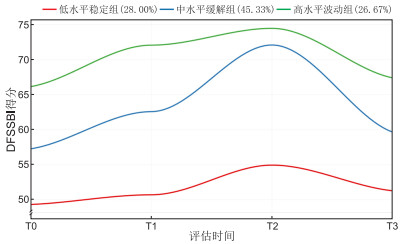
  Objective  During the initial period of peritoneal dialysis, patients experience complex and fluctuating symptoms. However, the dynamic patterns of these changes remain unclear. This study aims to identify potential trajectories of symptom burden in patients undergoing the initial phase of peritoneal dialysis and to explore the association between different trajectory characteristics and the risk of short-term cardiovascular and cerebrovascular adverse events (CCE), thereby providing evidence for early individualized intervention and improved long-term prognosis.  Methods  Patients in the early stage of peritoneal dialysis in the First People's Hospital of Linping District, Hangzhou from October 2022 to April 2025 were selected as the survey subjects. The recent incidence of CCE was statistically analyzed after two years of dialysis. The dialysis frequency severity and symptom burden index (DFSSBI) was used to assess the symptom burden at the initial dialysis (T0), 1 month of dialysis (T1), 3 months of dialysis (T2), and 6 months of dialysis (T3). The symptom burden trajectory was classified through the latent variable growth mixed model (LGMM). Logistic regression was used to analyze the influence of symptom burden trajectory on recent CCE.  Results  Among the 164 patients in the early stage of peritoneal dialysis included, 150 patients eventually completed the investigation. The follow-up period ranged from 3 to 32 months, with a median follow-up period of 15 months. CCE occurred in 40 patients, with an incidence rate of 26.67% (40/150). It was identified that there were three symptom burden trajectories for patients in the early stage of peritoneal dialysis: the low-level stable group (C1 group), the medium-level remission group (C2 group), and the high-level fluctuation group (C3 group). The symptom burden trajectory showed a significant linear trend with the occurrence of recent CCE, and the incidence of recent CCE was the highest in group C3 (P < 0.05).  Conclusion  There is population heterogeneity in the symptom burden trajectory of patients in the early stage of peritoneal dialysis. A persistently high symptom burden will increase the risk of recent CCE events in patients.
Study on the trajectory and influencing factors of fatigue in maintenance hemodialysis patients
XU Shaobo, LIU Yanhong, CHAI Jianli
2026, 24(5): 786-789. doi: 10.16766/j.cnki.issn.1674-4152.004491
9 2
Abstract:
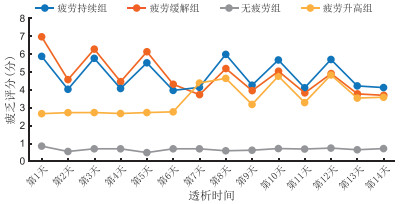
  Objective  To study the trajectory of fatigue changes and its influencing factors in maintenance hemodialysis (MHD) patients.  Methods  A total of 171 patients undergoing maintenance hemodialysis at Sir Run Run Shaw Hospital, Zhejiang University School of Medicine from February 2024 to January 2025 were selected. Their general information, laboratory indicators, interdialysis weight gain (IDWG), fatigue score, social support score and comorbidity index were collected. Latent class growth mixture modeling (GMM) was used to fit the latent class of fatigue trajectory of MHD patients for 14 days, and logistic analysis was used to analyze the influencing factors of fatigue trajectory.  Results  There were 116 cases (67.84%) with fatigue patients, and the degree of fatigue had four trajectories: 55 cases (32.16%) in the "no fatigue group", 62 cases (36.26%) in the "persistent fatigue group", 39 cases (22.81%) in the "fatigue relief group", and 15 cases (8.77%) in the "elevated fatigue group". Logistic regression analysis showed that: female, age ≥60 years, dialysis age ≥60 months, IDWG, an increase in comorbidity index were risk factors for fatigue in maintenance hemodialysis patients, while social support (high score) was a protective factor for fatigue in maintenance hemodialysis patients.  Conclusion  There are four fatigue trajectories in maintenance hemodialysis patients, and there is population heterogeneity. female, age ≥60 years, dialysis age ≥60 months, IDWG, an increase in comorbidity index are risk factors for fatigue in maintenance hemodialysis patients, while social support (high score) is a protective factor for fatigue in maintenance hemodialysis patients.
Association between breastfeeding and postpartum depression in women with gestational diabetes mellitus
WEI Yahong, ZHAO Mei, FANG Yuanyuan, WANG Wenxin, HUANG Yichao, FAN Yijun
2026, 24(5): 790-793. doi: 10.16766/j.cnki.issn.1674-4152.004492
10 2
Abstract:
  Objective  To investigate the impact of breastfeeding on postpartum depression (PPD)risk in women with gestational diabetes mellitus (GDM) and to compare breastfeeding practices and PPD risk between GDM and non-GDM women.  Methods  This prospective cohort study included 180 GDM and 198 non-GDM women, followed up for 6-8 weeks postpartum. Data on breastfeeding practices were collected via questionnaires. PPD risk was assessed using the Edinburgh postnatal depression scale (EPDS). Multivariable logistic regression and interaction analyses were conducted to evaluate the independent association between breastfeeding and PPD risk.  Results  No statistically significant differences were found between the GDM and non-GDM groups in breastfeeding rate or positive screening rate for PPD at 6-8 weeks postpartum (P>0.05). Multivariate logistic regression analysis showed that breastfeeding was an independent protective factor against PPD risk in the GDM group (OR=0.251, 95% CI: 0.090-0.702, P=0.009), whereas no significant association was observed in the non-GDM group (P>0.05). The interaction term between GDM status and breastfeeding was significant in the unadjusted model (P=0.027), but became non-significant after adjusting for confounding factors. Simple effects analysis further confirmed that the protective effect of breastfeeding against PPD was statistically significant only in the GDM group (OR=0.234, 95% CI: 0.086-0.634, P=0.004).  Conclusion  While the overall PPD risk was comparable between groups, breastfeeding confers a specific psychological protective effect in women with GDM. Therefore, breastfeeding support should be prioritized as a core intervention strategy for PPD prevention in this population.
Analysis of caries status among children aged 3-6 years in Tongling City and investigation of parental oral health knowledge and behaviors
FANG Hongying, FANG Zhirui, YE Shanshan, LIN Li, GAO Hongqiong
2026, 24(5): 794-797. doi: 10.16766/j.cnki.issn.1674-4152.004493
8 1
Abstract:
  Objective  To understand the level of oral health knowledge among parents of children aged 3-6 years in Tongling City, their implementation of oral health behaviors, and the prevalence of dental caries in children, thereby providing scientific evidence for interventions in children's oral health.  Methods  A stratified random cluster sampling method was employed to select 5 941 children aged 3-6 years and their parents from 28 kindergartens in three districts and one county of Tongling City during May to June 2024. Parents completed an online electronic questionnaire using "Wenjuanxing". The survey included demographic characteristics, oral health behaviors, oral health knowledge, and the prevalence of dental caries in children.  Results  The overall awareness rate of oral health knowledge among parents of 3-6 years in Tongling City was 77.5%, with a higher rate observed in urban areas than in rural areas (P < 0.05). Univariate analysis indicated that factors such as age, region, breastfeeding duration, frequency of consuming sweets before bedtime, frequency of daily sweet intake, timing of starting tooth brushing, frequency of assistance with brushing, frequency of checking brushing effectiveness, and type of fluoride treatment significantly affected the caries rate in children (P < 0.05). Gender and primary caregivers did not significantly influence the caries rate (P>0.05). Multivariate logistic regression analysis revealed that age (3- < 4 years: OR=0.273; 4- < 5 years: OR=0.427; 5- < 6 years: OR=0.738), living in urban areas (OR=0.629), initiating tooth brushing before 1 year of age (OR=0.482), breastfeeding duration (within 6 months: OR=0.607; 6-12 months: OR=0.793), and lower frequency of sweet consumption (≤ 1 time/week: OR=0.657; 2-6 times/week: OR=0.861) were negatively correlated with the occurrence of dental caries (P < 0.05). Conversely, consuming sweets before bedtime (frequently: OR=3.093; occasionally: OR=2.084) was positively correlated with the incidence of dental caries (P < 0.05).  Conclusion  Parents' oral health knowledge and behaviors are important factors influencing the occurrence of dental caries in children. Targeted oral health education and behavioral interventions should be implemented, with particular attention given to rural populations.
Potential profile analysis of parenting competence of parturients in obstetric wards and its relationship with anxiety and depression
ZHANG Aijin, CAO Shuhua, YE Suxiao, WANG Fang, WANG Dan
2026, 24(5): 798-802. doi: 10.16766/j.cnki.issn.1674-4152.004494
12 3
Abstract:
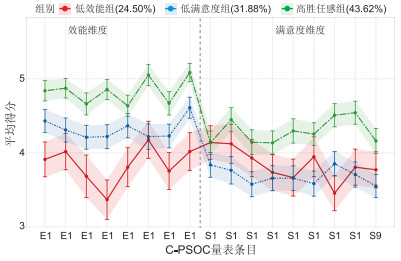
  Objective  To explore the potential categories of parenting sense of competence among puerperae in obstetrical wards, analyze the relationship between different categories and anxiety/depression, and provide evidence for early identification of groups with poor parenting adaptation as well as targeted psychological interventions.  Methods  The study selected 305 parturients from the obstetric ward of the Second Affiliated Hospital of Wenzhou Medical University between June 2024 and October 2025 as survey participants. The Chinese version of the parenting sense of competency scale (C-PSOC), the Chinese version of the postpartum specific anxiety scale (PSAS-CN), and the Chinese version of the postpartum depression screening scale (C-PDSS) were used to evaluate the parenting competency, anxiety symptoms, and depression symptoms of the parturients. The potential category characteristics of the parenting competence of parturients in the obstetric ward were analyzed through the potential profile. Multivariate linear regression analysis was used to identify the influencing factors of anxiety and depression in parturients.  Results  A total of 305 questionnaires were distributed, among which 3 had more than 10% missing data, and 4 were suspected of logical errors. Ultimately, 298 valid questionnaires were included in the analysis, yielding an effective response rate of 97.70%. The scores of C-PSOC, PSAS-CN, and C-PDSS of 298 parturients in the obstetric ward were (77.94±8.14) points, (72.93±12.45) points, and (57.30±11.08) points, respectively. This study identified three potential categories, which were respectively named the low-efficiency group (73 cases, 24.50%), the low-satisfaction group (95 cases, 31.88%), and the high-competence group (130 cases, 43.62%). Primiparas, comorbidities during pregnancy, having neonatal health problems, the spouse not participating in the care of the newborn, and the potential category of parenting competence being the low-efficiency group are the influencing factors of anxiety among parturients in the obstetric ward, and Age ≥35 years old, monthly family income < 5 000 yuan, spouse not involved in caring for newborns, and potential category of low satisfaction in parenting competence are the influencing factors of depression among parturients in the obstetric ward (P < 0.05).  Conclusion  There is heterogeneity in the parenting competence of parturients in the obstetric ward. The categories of parenting competence are closely related to the anxiety and depression of parturients, which is helpful for obstetric medical staff to optimize psychological intervention strategies to alleviate the anxiety and depression of parturients.
Analysis of the clinical effectiveness and cost-effectiveness of community-based rehabilitation therapy for chronic musculoskeletal pain
TAN Shuoyuan, Saidierding·Abulikemu, SHAO Yuqing, LING Zhiyi, JI Yiqing, JIAO Anqi, SHI Jianwei
2026, 24(5): 803-807. doi: 10.16766/j.cnki.issn.1674-4152.004495
10 1
Abstract:
  Objective  This study focuses on chronic musculoskeletal pain conditions, with the ultimate goal of identifying frequently applied rehabilitation techniques in primary care settings and analyzing their clinical effectiveness and cost-effectiveness, thereby exploring key issues in current service delivery and providing a scientific basis for optimization.  Methods  A total of 303 patients with chronic musculoskeletal pain were enrolled from six community health centers in Shanghai, between January 1 and July 30 2024, following screening against the eligibility criteria. Based on the type of rehabilitation technique received, patients were divided into three groups: western rehabilitation (n=101), traditional Chinese medicine (TCM) rehabilitation (n=101), and integrated Chinese-western rehabilitation (n=101). Clinical efficacy was evaluated by comprehensively assessing improvements in pain intensity and joint function, comparing high-frequency techniques within each group. Meanwhile, we calculated patient medical costs and assessed the cost-effectiveness ratio (CER) for each technique.  Results  Among western rehabilitation techniques, physiotherapy demonstrated the highest overall effectiveness (93.48%, 43/46) and best cost-effectiveness (CER=4.27), significantly outperforming the combination of exercise therapy and manual therapy (Overall Efficiency Rate: 82.35%, 14/17; CER= 11.54). Among TCM techniques, the single-modality massage therapy demonstrated similar clinical efficacy (96.97%, 32/33) to the combined massage, acupuncture and cupping therapy group (94.74%, 18/19). However, its cost was significantly lower (360 RMB vs. 710 RMB), resulting in greater economic value (CER: 3.71 vs. 7.49).  Conclusion  For patients with chronic musculoskeletal pain, both physiotherapy and massage treatment demonstrate high efficacy and cost-effectiveness. However, challenges such as insufficient service efficiency, lack of standardized protocols and variability in service quality persist during implementation.
Effect of a migraine management model dominated by headache specialists and centered on community doctors
LI Yuyu, SUN Hui, MA Bo, YE Ming, XU Li
2026, 24(5): 808-811. doi: 10.16766/j.cnki.issn.1674-4152.004496
10 1
Abstract:
  Objective  To investigate the application effect of a chronic disease management model led by headache specialists and centered on community doctors in patients with migraine, so as to improve headache symptoms and quality of life.  Methods  A total of 160 migraine patients treated in the Department of Neurology, the First Affiliated Hospital of Bengbu Medical University from January 2023 to June 2024 were selected and divided into the active management group and the control groups by random number table method, with 80 cases in each group. The control group received routine diagnosis and treatment model, while the active management group received an active management model. Headache symptoms and quality of life were evaluated before management and 12 months after management, respectively. Logistic multivariate regression analysis was used to analyze the factors affecting patients' quality of life.  Results  At 12 months of management, the monthly attack frequency and duration in the active management group were lower than those before management (P < 0.001), and the VAS score was decreased compared with before management [4.0 (3.0, 5.0) vs. 8.0 (7.0, 9.0), Z=120.498, P < 0.001]. migraine disability assessment scale (MIDAS) score, generalized anxiety disorder-7 (GAD-7) score, patient health questionnaire-9 (PHQ-9) score, and Pittsburgh sleep quality index (PSQI) score were all lower than before (P < 0.01). Headache impact test-6 (HIT-6) score was decreased, and short form 36 health survey (SF-36) score was increased compared with before (both P < 0.01). Multivariate logistic regression analysis showed that management model, baseline attack frequency, VAS score, GAD-7 score, and PSQI score were independent factors affecting the improvement of patients' quality of life (P < 0.05). After adjusting for confounders, patients in the active intervention group had a 5.58-fold higher odds of an increased SF-36 score compared with the control group (B=1.720, SE=0.340, Waldχ2=25.800, P < 0.01).  Conclusion  The chronic disease management model led by specialists and centered on community doctors can improve the quality of life of migraine patients.
Correlation between the variability of MMP family levels and the responsiveness to allergen-specific immunotherapy in children with allergic diseases
TANG Yanping, SHAO Lei
2026, 24(5): 812-815. doi: 10.16766/j.cnki.issn.1674-4152.004497
11 1
Abstract:
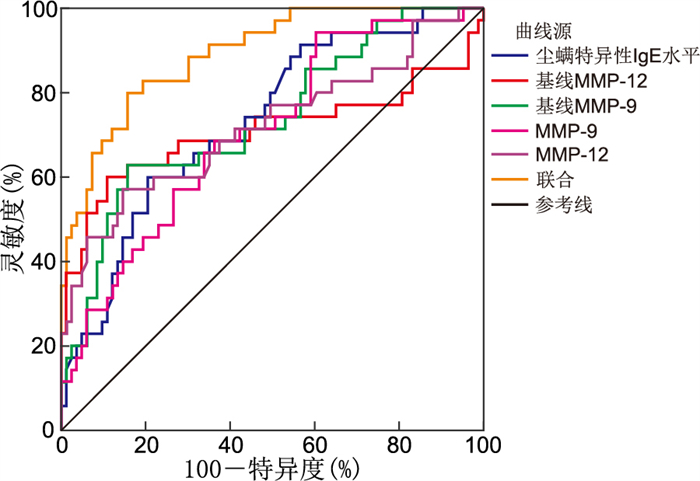
  Objective  MMPs can serve as biomarkers for early prediction of treatment efficacy of sublingual immunotherapy (SLIT) in children with allergic rhinitis (AR).However, whether they can be used to predict the efficacy of subcutaneous immunotherapy (SCIT) for allergen-specific therapy still requires further validation.Therefore, this study aims to investigate the correlation between the variability of matrix metalloproteinase (MMP) levels and the responsiveness of AR children to SCIT.  Methods  A total of 121 AR children admitted to the Chun'an Branch of Zhejiang Provincial People's Hospital from January 2021 to January 2022 were enrolled.All participants received a 3-year standard SCIT.Based on treatment responsiveness, children were categorized into effective and ineffective groups.Simultaneously, the variability of MMP levels was collected, and multivariate logistic regression analysis was employed to investigate its correlation with SCIT responsiveness.  Results  Among 121 children with AR who received treatment over a 3-year period, 3 failed to complete the full 3-year course and were therefore excluded.A total of 118 children were finally included in the analysis.Of these, 83 children achieved a reduction in the combined symptom and medication score (CSMS) of ≥30% and were classified into the effective group, while 35 children with a CSMS reduction of < 30% were assigned to the ineffective group.Multivariable logistic regression analysis showed that serum house dust mite-specific IgE levels, baseline MMP-9, baseline MMP-12, △MMP-9, and △MMP-12 were influencing factors associated with SCIT responsiveness in children with AR (all P < 0.05).The areas under the curve (AUCs) for predicting SCIT responsiveness were 0.733 for serum house dust mite-specific IgE, 0.738 for baseline MMP-9, 0.709 for baseline MMP-12, 0.706 for △MMP-9, 0.722 for △MMP-12, and 0.891 for the combined model.  Conclusion  Serum house dust mite-specific IgE levels, baseline MMP-9, baseline MMP-12, △MMP-9, and △MMP-12 levels are factors associated with 3-year SCIT responsiveness in children with AR.
Relationship between psychosocial adjustment, post-traumatic growth and self-efficacy in patients with ovarian cancer
ZHANG Xianfeng, SU Lei, WANG Jing, SONG Miaomiao, CAI Zhihui, LI Yanling, WANG Gaijing
2026, 24(5): 816-820. doi: 10.16766/j.cnki.issn.1674-4152.004498
11 1
Abstract:
  Objective  There are relatively few studies on the relationship among post-traumatic growth (PTG), self-efficacy and psychosocial adaptability in patients with ovarian cancer.This study explores the relationship between the psychosocial adaptation level, PTG and self-efficacy, with the aim of providing a basis for clinical intervention of such patients in the future.  Methods  A total of 228 patients with ovarian cancer treated in Affiliated Hospital of Hebei Medical University from June 2022 to November 2023 were investigated by questionnaire using convenient sampling method.Pearson correlation was used to analyze the relationship of self-report psychosocial adjustment to illness scale (PAIS-SR) with post-traumatic growth inventory (PTGI) score and Chinese-version strategies used by people to promote health (C-SUPPH) in ovarian cancer patients.Multiple linear regression analysis was used to explore the influencing factors of psychosocial adaptation level of patients.  Results  In this study, the recovery efficiency rate of questionnaires was 99.12%(226/228).The PAIS-SR scores of patients with diagnosis time ≤1 month and disease stage Ⅲ-Ⅳ were higher than those with diagnosis time >1 month and disease stage Ⅰ-Ⅱ(t=3.705 and 2.429, P < 0.05).Correlation analysis showed that PAIS-SR score was negatively correlated with PTGI and C-SUPPH (r=-0.540 and-0.557, P < 0.05), and positively correlated with Montreal cognitive assessment scale (MoCA, r=0.584, P < 0.05).Regression analysis showed that new possibilities (β=-2.010), appreciation of life (β=-0.929), emotional control (β=-1.276), interpersonal relationship (β=1.930) and MoCA score (β=-0.411) were the influencing factors of psychosocial adaptation level in ovarian cancer patients (P < 0.05).  Conclusion  Ovarian cancer patients generally have a low level of psychosocial adaptation level, which is related to PTG, self-efficacy and cognitive function to some extent.
Clinical application value of Trio-WES in prenatal diagnosis of fetuses with increased nuchal translucency
ZHOU Pei, YU Mei, WU Renhua, YUAN Jing
2026, 24(5): 821-824. doi: 10.16766/j.cnki.issn.1674-4152.004499
7 1
Abstract:
  Objective  To evaluate the clinical efficacy and application value of trio whole-exome sequencing (Trio-WES) in the prenatal genetic diagnosis of fetuses with increased nuchal translucency (NT).  Methods  A total of 50 singleton pregnancies with increased NT were enrolled from the First Affiliated Hospital of Anhui Medical University between August 2023 and March 2025.All cases underwent concurrent amniotic fluid karyotyping, chromosomal microarray analysis (CMA), and trio-WES.A retrospective comparative analysis of the results was performed.  Results  Genetic testing identified 16(32.0%) abnormal cases and 34(68.0%) normal cases among the 50 fetuses.Specifically, the detection rates were 10.0%(5/50) by karyotyping, 20.0%(10/50) by CMA, and 32.0%(16/50) by Trio-WES.Trio-WES findings included 5 chromosomal aneuploidies (consistent with karyotyping and CMA), 4 copy number variations (consistent with CMA), and 7 pathogenic single-gene variants, yielding an incremental diagnostic yield of 14.0%.No statistically significant difference was observed between karyotyping and CMA (P=0.074).Trio-WES demonstrated a significantly higher detection rate than karyotyping (P < 0.001), while its difference compared to CMA was not statistically significant (P>0.017).In cases with both increased NT and advanced maternal age (≥35 years), the detection rate of Trio-WES was significantly higher (P=0.014).  Conclusion  Trio-WES significantly improves the genetic diagnostic yield for fetuses with increased NT.Its ability to identify single-gene disorders provides unique diagnostic value, demonstrating particular clinical significance in the advanced maternal age population.
Research progress on early identification and full cycle management strategies for medically unspecified disease from the perspective of medical prevention integration
WANG Chaohui, REN Jingjing, QIU Yan
2026, 24(5): 825-828. doi: 10.16766/j.cnki.issn.1674-4152.004500
11 4
Abstract:
General Secretary Xi Jinping pointed out in the report to the 19th National Congress of the Communist Party of China that we will carry out the Healthy China initiative,improve the national health policy,and provide comprehensive lifecycle health services for the people.Against this backdrop,the integration of medical and preventive measures is seen as a key path to breaking the fragmentation of medical resources and improving the effectiveness of continuous health management.By integrating clinical diagnosis and treatment,public health,health management,and social security,it builds a continuous care network with data sharing,service collaboration,and shared responsibility,thereby enhancing the overall efficiency of early disease identification,risk stratification intervention,and prognosis tracking,laying the foundation for optimizing resource allocation,strengthening grassroots capabilities,and realizing value-based healthcare.Medical unspecified disease (MUD) has become a new challenge for collaborative management between grassroots and specialized departments due to its heterogeneous clinical manifestations,difficulty in early diagnosis,repeated medical visits and heavy psychological burden on patients,and huge consumption of full cycle management resources.Therefore,the early identification and full cycle management of MUD from the perspective of medical prevention integration have received increasing attention.This article adopts a systematic literature review as the methodological framework,focusing on "medical prevention integration","medically unspecified disease", "full cycle management",using keywords such as "early identification" and "full cycle management",this study searched for relevant literature on medical prevention integration,medically unspecified disease,early identification,and full cycle management in China national knowledge infrastructure (CNKI),PubMed,Web of Science,and the National Health Commission's policy database from 2019 to 2025.A comprehensive analysis and summary were conducted to explore early identification and full cycle management strategies for MUD,and to analyze how medical prevention integration can assist in unspecified disease management,providing theoretical references for improving overall medical service quality,optimizing medical resource allocation,and enhancing early identification and full cycle management capabilities for medically unspecified disease.

Application value and research progress of AI-assisted lung ultrasound in the diagnosis and treatment of neonatal respiratory distress syndrome
LU Han, ZUO Lili, CHEN Xiaoqing
2026, 24(5): 829-832. doi: 10.16766/j.cnki.issn.1674-4152.004501
12 2
Abstract:
Neonatal respiratory distress syndrome (NRDS) is one of the most critical and representative diseases in preterm infants, primarily caused by a deficiency of pulmonary surfactant (PS), and it remains one of the leading respiratory causes of mortality in this population.Traditional diagnosis relies on chest X-ray, but its clinical utility is limited due to radiation exposure and image variability.Point-of-care critical ultrasound (POCUS) has gained widespread recognition in critical care medicine for its diagnostic value.As a core component, lung ultrasound (LUS) offers distinct advantages in the diagnosis and comprehensive management of NRDS, owing to its radiation-free nature and real-time bedside assessment capabilities.It not only enables rapid and accurate diagnosis of NRDS but also effectively differentiates it from similar conditions such as transient tachypnea of the newborn, pneumonia, pneumothorax, and meconium aspiration syndrome.Advancements in artificial intelligence (AI), big data, and 5G technology have opened new opportunities for LUS.AI, through deep learning and image recognition algorithms, significantly enhances the efficiency and precision of LUS image analysis, making the diagnosis of NRDS more efficient and accurate.Big data provides an evidence-based chain to support individualized treatment plans for newborns, further optimizing therapeutic strategies.Meanwhile, 5G technology offers robust support for remote LUS consultations, particularly in resource-limited areas.AI-powered LUS enables more efficient and advanced remote diagnostics and treatment, improving the comprehensive, system-wide management of preterm infants with NRDS across multiple dimensions.This review aims to summarize the application value of AI-powered LUS in the diagnosis and treatment of NRDS and explore the latest research advancements in related technologies.
Heart-spleen axis in cancer cachexia-related myocardial injury: mechanisms and therapeutic strategies
FANG Yan, GUO Xiaodong
2026, 24(5): 833-837. doi: 10.16766/j.cnki.issn.1674-4152.004502
9 2
Abstract:
Cancer cachexia is a multifactorial clinical syndrome associated with tumors.It is characterized by progressive loss of skeletal muscle mass, weight loss, and anorexia.Conventional nutritional support often fails to fully reverse the condition, significantly compromising survival and quality of life in cancer patients.It is one of the leading causes of death in advanced cancer, with the highest incidence observed in pancreatic cancer.The development of this syndrome is closely linked to systemic metabolic disturbances and inflammatory factors such as tumor necrosis factor-alpha (TNF-α) and interleukin-1β(IL-1β).Current research has focused primarily on skeletal muscle depletion.However, accumulating evidence indicates that cachexia also induces myocardial injury, manifested as reduced cardiac mass and impaired cardiac function.Currently, no effective therapeutic strategies are available for the prevention and treatment of this condition.From the perspective of traditional Chinese medicine, such myocardial impairment corresponds to the categories of "palpitations" or "cardiac consumption, a pattern of consumptive disease".Based on the"heart-spleen axis "theory, the heart governs the blood and vessels, while the spleen governs transportation and transformation.These two organs interact physiologically to maintain the generation, distribution, and function of qi and blood.In cancer cachexia, dysfunction of the heart-spleen axis occurs: spleen deficiency impairs transportation, leading to inadequate generation of qi and blood (root deficiency).Simultaneously, accumulated cancer toxins combine with phlegm and stasis to form" toxic stasis ", which further damages the cardiac collaterals (branch excess).This combination of root deficiency and branch excess ultimately contributes to myocardial atrophy and functional decline.Accordingly, this paper proposes a therapeutic principle of" strengthening the spleen, nourishing the heart, while resolving toxicity and stasis".Through integrated interventions, including Chinese herbal medicine, acupuncture, therapeutic exercises, and dietary therapy, this approach aims to achieve multi-target, holistic regulation, improve nutritional status, suppress systemic inflammation, and protect myocardial structure and function.It may thus offer novel insights for the clinical prevention and treatment of cancer cachexia-associated myocardial injury.
Clinical research on the treatment of insomnia accompanied by myocardial bridge with Ningxin Kangqiao Sleeping Formula and acupoint application therapy
CHEN Shouqiang, GAO Yuxia
2026, 24(5): 838-840. doi: 10.16766/j.cnki.issn.1674-4152.004503
10 1
Abstract:
  Objective  To observe the efficacy of Ningxin Kangqiao Sleeping Formula combined with acupoint application therapy in patients with myocardial bridge and insomnia, and to provide a new way for the treatment of this disease.  Methods  A total of 90 patients with myocardial bridge and insomnia selected from the Second Affiliated Hospital of Shandong University of Traditional Chinese Medicine from November 2022 to November 2023 were used the random number table method divided into the conventional group (30 cases), traditional Chinese medicine (TCM) group (30 cases), and medicine acupoint group (30 cases).The conventional group was given general Western medicine treatment for myocardial bridge, and alprazolam tablets were administered for insomnia.The Chinese medicine group was treated with the Ningxin Kangqiao Sleeping Formula in addition to the treatment of the conventional group.The medicine acupoint group was treated with the application of the Yongquan acupoint in addition to the treatment of the Chinese medicine group.The changes of TCM syndrome scores and Pittsburgh sleep quality index were compared to verify their clinical efficacy and evaluate their safety.  Results  Before treatment, there was no statistically significant difference in the total TCM syndrome score and PSQI score among the three groups (P>0.05).After treatment, the total TCM syndrome scores[(12.26±2.27) points, (7.70±2.37) points, (5.55±2.28) points]and PSQI scores[(12.43±2.08) points, (11.17±2.28) points, (9.33±1.45) points]of the three groups were significantly different (P < 0.001).After treatment, the PSQI and total TCM syndrome scores of the three groups were significantly improved, and the differences were statistically significant (P < 0.05).The total TCM syndrome score and PSQI score of the TCM group were better than those of the conventional group, and the scores of the medicine acupoint group were better than those of the TCM group and the conventional group.  Conclusion  The addition and subtraction of Ningxin Kangqiao Sleeping Formula combined with acupoint application therapy in the treatment of patients with Qi and Yin deficiency, stasis and disturbance myocardial bridge with insomnia has a better effect in improving TCM symptoms and sleep, and has a good clinical safety.
Effects of umbilical moxibustion combined with intermittent catheterization on lower urinary tract symptoms and bladder function in patients with neurogenic bladder following spinal cord injury
LI Wenjuan, ZOU Qiuyu, ZHOU Fen, XIE Ling, XU Jing, ZHENG Yingqian, WANG Qiong
2026, 24(5): 841-845. doi: 10.16766/j.cnki.issn.1674-4152.004504
9 1
Abstract:
  Objective  To evaluate the effects of combining umbilical moxibustion with intermittent catheterization on lower urinary tract symptoms (LUTS) and bladder function in patients with neurogenic bladder (NB) following spinal cord injury (SCI), aiming to provide the optimization of management strategies for post-SCI NB.  Methods  A total of 84 NB patients following SCI admitted to the First Hospital of Hunan University of Chinese Medicine from April 2023 to April 2025 were enrolled and randomly divided into a combination group (n=42) and a control group (n=42) using the sealed envelope method. The control group received intermittent catheterization, while the combination group additionally received umbilical moxibustion for 4 weeks. Clinical efficacy and safety were evaluated. Urination parameters (maximum voided volume per void, single void volume over 24 h, 24-hour voiding frequency), bladder function [maximum bladder capacity (MCC), bladder compliance (BC), maximum urinary flow rate (Qmax), post-void residual volume (PVR)], urinary tract infection indicators (urinary white blood cell count), and LUTS [international LUTS symptom score] were assessed before and after treatment.  Results  The total effective rate in the combination group was 92.86% (39/42), which was higher than that in the control group [71.43% (30/42), P < 0.05]. After 4 weeks of treatment, both groups showed increased in maximum voided volume, single void volume over 24 h, MCC, BC, and Qmax, with greater improvements in the combination group (P < 0.05). Both groups also exhibited reduced 24-hour voiding frequency, PVR, urinary white blood cell count, and LUTS scores, with lower values in the combination group (P < 0.05).  Conclusion  Umbilical moxibustion combined with intermittent catheterization significantly improves bladder function and LUTS, reduces urinary tract infections, and demonstrates good safety in NB patients following SCI.
Investigation on the current situation of outpatient teaching in standardized training for general practice residents
LEI Si, YE Yun, ZHUO Hui, ZHANG Hui, WU Sha, LUO Yingquan, ZHU Wang, XU Yan
2026, 24(5): 846-850. doi: 10.16766/j.cnki.issn.1674-4152.004505
11 1
Abstract:
  Objective  The purpose of this study is to investigate and analyze the current situation and existing problems of outpatient teaching in the standardized training of general practitioners in Hunan Province, and to propose suggestions for improving the effectiveness of the outpatient teaching.  Methods  A cross-sectional survey was conducted among 85 general practitioners in the backbone teacher training program for standardized general practice training in Hunan Province in November 2023 through the questionnaire star platform. Information on the setup of general practice clinics, the requirements of teachers, the selection of patients, the implementation of outpatient teaching, and the existing problems and difficulties was collected.  Results  (1) A total of 70.59% (60/85) of the training bases had established outpatient teaching, 75.00% (45/60) had independent clinics, 68.33% (41/60) of the residential training bases had independent teaching evaluation rooms; however, only 28.33% (17/60) were equipped with recording and broadcasting facilities. (2) A total of 58.33% (35/60) of patients made appointments for the outpatient teaching in advance; most were patients with multiple chronic diseases (88.33%, 53/60) who needed comprehensive assessment and medication guidance. (3) A total of 61.67% (37/60) adopted an independent outpatient teaching mode. In addition, 70.00% (42/60) of the teachers paid attention to stratified teaching in the teaching process, while only 18.33% (11/60) were able to provide timely feedback every time. (4) The main problems faced in the outpatient teaching included lack of teaching experience (76.67%, 46/60), shortage of teachers (45.00%, 27/60) and insufficient patient resources (35.00%, 21/60).  Conclusion  Some achievements have been made in the development of outpatient teaching in general practice bases; however, there are still many problems and challenges in its implementation. Further improvements are needed through strengthening policy support, refining assessment criteria and incentive mechanism, in order to optimize the teaching effectiveness.
Analysis of three-year completion assessment results of standardized training for resident doctors in Gansu Province from 2019 to 2021
LI Yurong, XU Ruiyuan, WANG Jinhua, GAO Chen, WANG Zhe
2026, 24(5): 851-853. doi: 10.16766/j.cnki.issn.1674-4152.004506
7 1
Abstract:
  Objective  To analyze the graduation assessment results of the standardized residency training (hereinafter referred to as "Resident Training") in Gansu Province, investigate existing issues in the training program, and propose improvement strategies.  Methods  The graduation assessment results of the standardized residency training in Gansu Province over the past three years were collected. Categorical data presented as [cases (%)]. Intergroup comparisons were conducted using the χ2 test or Fisher's exact test.  Results  This study included a total of 2 841 candidates who completed the standardized residency training program. The distribution by enrollment year was as follows: 708 candidates from the 2019 cohort, 1 083 from the 2020 cohort, and 1 050 from the 2021 cohort. The specialties were ranked by descending order of participation: Surgery (725/2 841, 25.52%), Internal Medicine (718/2 841, 25.27%), General Practice (581/2 841, 20.45%), Dermatology (21/2 841, 0.74%, lowest participation). The training bases were ranked by descending order of examinee participation: the Second Hospital of Lanzhou University (780/2 841, 27.45%), the First Hospital of Lanzhou University (668/2 841, 23.51%), Gansu Provincial People's Hospital (681/2 841, 23.97%). Over the three-year period, the theoretical knowledge pass rate (88.21%) was significantly lower than the practical skills pass rate (97.79%, P < 0.05). Specialties demonstrating year-on-year improvement in pass rates included Internal medicine, General practice, Obstetrics & Gynecology, among others, while training bases with consistent progress included Gansu Provincial People's Hospital and 940th Hospital. The highest pass rates by specialty were: Neurology (98.03%), General practice (96.13%), Anesthesiology (95.48%), Otorhinolaryngology (73.42%, lowest).  Conclusion  Over the past three years, the graduation assessment pass rates for standardized residency training in Gansu Province have shown a year-on-year increase. However, the theoretical knowledge pass rate remains significantly lower than the practical skills pass rate, highlighting the need to strengthen the cultivation of clinical reasoning abilities among trainees. Furthermore, substantial disparities in pass rates are observed across different training bases and specialties, underscoring the urgency to standardize teaching practices and achieve homogeneous training quality throughout the program.
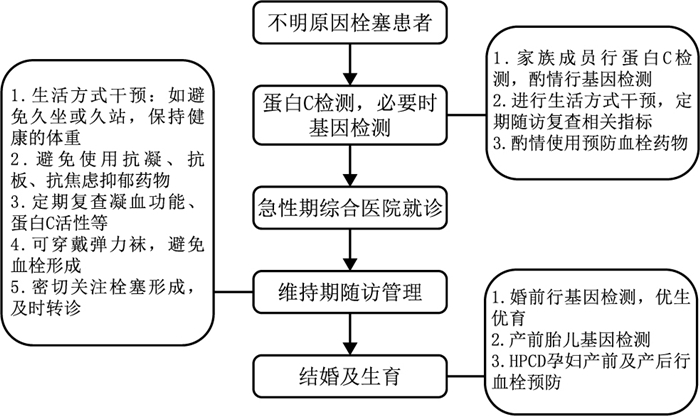
Implementation path of cultivating innovative ability of graduate students in key laboratories in the context of new medical science
YU Hongdan, YU Shengxue, ZUO Zhongfu
2026, 24(5): 854-857. doi: 10.16766/j.cnki.issn.1674-4152.004507
12 1
Abstract:
Postgraduate education is an important part of national education, and medical graduate education affects the promotion and implementation of "Strong Education Country" and "Healthy China" strategies. The new era requires new medical talents, and cultivating high-quality medical talents is one of the important strategies for realizing a healthy China. Graduate medical students are the most important members of research laboratories in medical colleges and universities, and they are an important reserve force of future advanced medical talents. Graduate medical education is of great significance in cultivating high-level innovative medical talents. Research ability and research thinking, as an important part of medical education, are at the root of postgraduate medical education. With the reform of medical education, the mode of medical postgraduate training has also changed. The combination of academic postgraduate training in medicine and standardized residency training is a key element in the reform of medical education in China. Moral development is an important part of medical education, in which research competence is a top priority for graduate education. Innovative research thinking is a fundamental competency necessary for graduate students. Research thinking is ultimately translated into experimental skills to create the desired research results. Strong laboratory skills are the focus of successful graduate student training. Provincial key laboratories play a pivotal role in the training of graduate medical students. However, postgraduate training is facing a widely criticized situation. Therefore, this paper takes provincial key laboratories as the perspective, takes the scientific research and innovation ability of medical postgraduates as the goal, discusses the problems of postgraduates' innovation ability cultivation in key laboratories, and puts forward the implementation path of "establishing postgraduates' cultivation system, practicing scientific research thinking and experimental skills, and improving comprehensive quality". It will improve the training strategy of provincial key laboratories for postgraduate medical students.
Latent profile analysis and network analysis of symptom among acute stroke patients
ZHU Fengyi, ZHANG Hui, LIU Annuo, XU Jing, GE Yao, LIU Meng
2026, 24(5): 858-862. doi: 10.16766/j.cnki.issn.1674-4152.004508
12 1
Abstract:
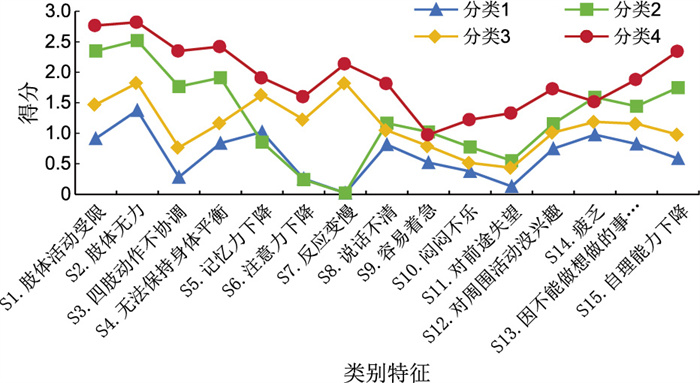
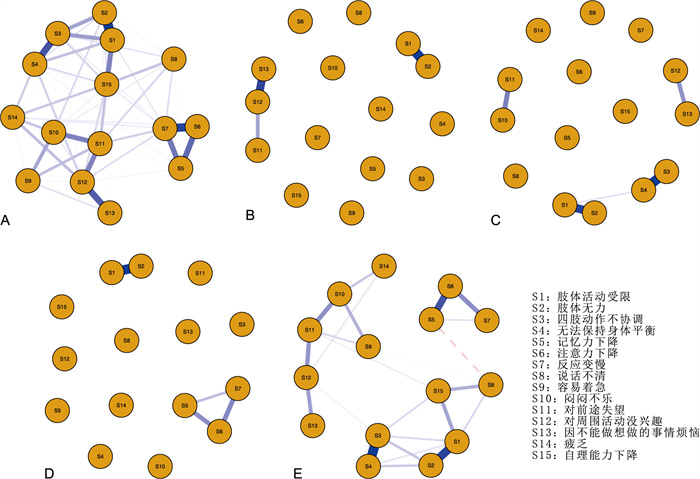
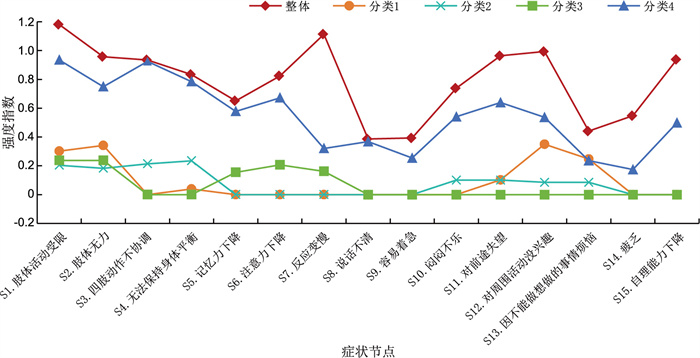
  Objective  Aiming at the clinical feature of population heterogeneity in symptoms among patients with acute stroke, thereby exploring the latent profile categories in acute stroke patients, constructing network characteristics, and identifying core symptoms in each group.  Methods  From July 2024 to March 2025, 351 acute stroke patients hospitalized in the Department of Neurology of the First Affiliated Hospital of Anhui Medical University were selected by convenience sampling method. A general information questionnaire and the stroke symptom experience scale were used for data collection. Mplus 8.3 software was used to construct the latent profile model, and symptom networks were built and centrality indices were analyzed using R programming language.  Results  A total of 351 patients with complete data were enrolled, including 233 males and 118 females, aged 18-92 years [(66.07±12.48) years]. Symptoms in acute stroke patients could be categorized into four latent categories: low symptom burden group [85 cases (24.2%)], moderate symptom burden-low cognitive impairment group [81 cases (23.1%)], moderate symptom burden-high cognitive impairment group [83 cases (23.6%)], and high symptom burden group [102 cases (29.1%)]. Based on symptom network analysis, the core symptom in the overall sample was limitation of limb movement. The core symptom in the low-symptom burden was lack of interest in surrounding activities. The core symptom in the medium-symptom burden-low cognitive impairment group was the inability to maintain body balance. The core symptom in the medium-symptom burden-high cognitive impairment group and high-symptom burden group was limitation of limb movement.  Conclusion  Group heterogeneity is evident in symptom distress among acute stroke patients, which can be categorized into 4 categories. Healthcare professionals should develop targeted clinical symptom management strategies based on the core symptoms in different symptom categories.
Analysis of antibiotic use in clinical departments of a hospital
PENG Tingting, XU Jian, KONG Lingti
2026, 24(5): 863-865. doi: 10.16766/j.cnki.issn.1674-4152.004509
10 3
Abstract:
  Objective  To investigate and analyze the basic situation of antimicrobial use among inpatients in a hospital, with the aim of identifying the general patterns and issues related to antimicrobial usage, promoting standardized and rational antimicrobial use in clinical settings, and ensuring patients medication safety.  Methods  Data on antimicrobial consumption among inpatients in various clinical departments in the hospital from 2019 to 2023 were collected. The average length of hospital stay (days) and the total number of discharged patients during the same period were obtained. The antimicrobial use density (AUD) and antimicrobial usage rate (AUR) among inpatients were calculated. Statistical analysis was conducted to rank each department and each antimicrobial agent according to their AUD values.  Results  The overall AUR among inpatients was 42.99%. The five departments with the highest AUR were Emergency Surgery (90.38%), Urology (87.66%), Otorhinolaryngology (86.57%), Gynecology (85.53%), and ICU (85.45%). The three departments with the lowest AUR were Oncology Surgery (8.72%), Oncology Medicine (7.16%), and Ophthalmology (5.59%). The overall AUD among inpatients was 45.38. The five departments with the highest AUD were the ICU (216.41), Emergency Surgery (211.77), Emergency Medicine (137.05), Pediatrics (97.35), and Hematology (97.30). The three departments with the lowest AUD were Rehabilitation Medicine (7.41), Oncology Medicine (7.26), and Ophthalmology (5.07). The five antimicrobial agents with the highest AUD were levofloxacin (7.29), cefodizime (6.63), cefuroxime (3.43), cefathiamidine for injection (2.51), and cefoperazone sodium and sulbactam sodium for injection (2.35). The three agents with the lowest AUD were azithromycin for injection (0.77), cefoxitin sodium for injection (0.72), and cefazolin sodium for injection (0.66).  Conclusion  The AUD is excessively high in this hospital, indicating the need to further strengthen antimicrobial management to promote the rational use of antibiotics.
The mediating effect of positive perceptions on the relationship between caregiver readiness and disease uncertainty among caregivers of children with leukemia undergoing PICC catheterization
CHEN Yingqiu, WANG Runping, ZHENG Xiaofen, DAI Xiaozhong, CHEN Aiwu
2026, 24(5): 866-868. doi: 10.16766/j.cnki.issn.1674-4152.004510
10 1
Abstract:
  Objective  To explore the current situation of caregiver readiness, positive perceptions, and illness uncertainty among family caregivers of children with leukemia undergoing PICC catheterization, and to analyze the relationships among the three variables, thereby providing evidence for clinical improvement aimed at reducing caregivers' sense of disease uncertainty.  Methods  Convenience sampling method was used to select the family caregivers. A total of 109 leukemia patients with PICC catheterization who admitted to the Department of Pediatric Hematology, the Second Affiliated Hospital of Wenzhou Medical University from January 2024 to June 2024 were recruited. General information form, prent's perception uncertainty in illness scale (PPUS), positive aspects of care giver scale (PAC), and care preparedness scale (CPS) were used for investigation. Pearson correlation analysis was applied to explore the correlations among the three variables.  Results  The mean PPUS score was (89.54±12.98) points, the PAC score was (25.18±5.27) points, and the CPS scale score was (24.07±3.38) points. There was a positive correlation between caregiver readiness and positive perception (r=0.495, P < 0.01). While caregiver readiness and positive perception were both negatively correlated with disease uncertainty (r=-0.385, -0.408, P < 0.01). Positive perceptions partially mediated the relationship between caregiver readiness and disease uncertainty, with a mediating effect value of 0.179 (95% CI: 0.122- 0.235, P < 0.001), accounting for 46.22% of the total effect.  Conclusion  Positive perceptions paly a partial mediating role in the relationship between caregiver readiness and disease uncertainty among caregivers of children with leukemia undergoing PICC catheterization. Medical staff can alleviate the uncertainty of illness among caregivers of sick children by improving their caregiver preparedness and enhancing their positive perceptions.
Correlation between self-management ability, psychological resilience, and complications in cervical cancer patients undergoing chemotherapy via PICC
ZHONG Chunyu, ZHU Chenjing, CHENG Yin
2026, 24(5): 869-873. doi: 10.16766/j.cnki.issn.1674-4152.004511
12 2
Abstract:
  Objective  To analyze the correlation between self-management ability, psychological resilience level, and the risk of complications in chemotherapy patients with peripherally inserted central catheter (PICC) for cervical cancer, and to provide evidence for the development of targeted nursing strategies.  Methods  Between January 2022 and January 2025, a retrospective analysis was conducted on 120 patients with cervical cancer treated with PICC catheterization in Jiangsu Cancer Hospital. The patients were divided into a no-complication group (n=95) and a complication group (n=25) according to the occurrence of complications within one month after PICC tube placement. The self-management ability and psychological resilience were assessed used the strategies used by people to promote health (SUPPH) and the connor-davidson resilience scale (CD-RISC), respectively. The factors influencing complications in patients with cervical cancer PICC tube placement chemotherapy were analyzed by binary logistic regression model. The correlation between self-management ability (SUPPH score) and psychological resilience (CD-RISC score) of patients with cervical cancer PICC tube placement chemotherapy was analyzed by Pearson correlation.  Results  Complications occurred in 25 cases (20.8%) of 120 patients with cervical cancer PICC tube placement chemotherapy, with infection being the most common type (7.5%, 9 cases). Three patients experienced 2 or more complications. The total CD-RISC score ranged from 33 to 66, with a mean of 48.59±7.38, while the total SUPPH score ranged from 54 to 111, with a mean of 82.86±10.13. Binary logistic regression showed that age was not significantly associated with the occurrence of complications in patients undergoing PICC tube placement chemotherapy for cervical cancer (P>0.05). However, receiving more than 5 chemotherapy treatments, lower CD-RISC scores, and lower SUPPH scores were significantly associated with an increased risk of complications in patients undergoing PICC tube placement chemotherapy for cervical cancer (P < 0.05). Pearson's correlation analysis showed that CD-RISC score was positively correlated with SUPPH score in patients with cervical cancer PICC tube placement chemotherapy (r=0.870, P < 0.001).  Conclusion  The main type of complications in patients with PICC tube placement chemotherapy for cervical cancer is infection. Self-management ability and level of psychological resilience are closely related to the occurrence of complications. More than five chemotherapy treatments, lower CD-RISC scores, and SUPPH scores are the independent risk factors for the occurrence of complications.
Impact of tiered preventive nursing based on Neuman systems model on psychological state and self-management ability in corneal transplantation patients
XU Jingjing, ZHANG Qian, FU Wenjing, CAI Junjie
2026, 24(5): 874-878. doi: 10.16766/j.cnki.issn.1674-4152.004512
10 2
Abstract:
  Objective  To develop a tiered preventive nursing model based on Neuman systems model and evaluate its effects on psychological status, self-management ability, and quality of life in patients after corneal transplantation, thereby providing practical evidence for optimizing postoperative care in ophthalmology.  Methods  A total of 182 patients who underwent corneal transplantation at the Affiliated Eye and Vision Hospital of Wenzhou Medical University between December 2023 and November 2024 were enrolled as participants in this study. These patients were randomly assigned to either a control group or an observation group, with 91 patients in each group. Patients in the control group received routine nursing care, while those in the observation group were provided with preventive nursing based on Neuman systems model in addition to routine care. The psychological status, self-management ability, and quality of life were assessed before and after the intervention, and the postoperative complications were recorded in both groups.  Results  After the intervention, the scores on the self-rating anxiety scale (SAS) and self-rating depression scale (SDS) in the observation group were (44.66±4.23) points and (40.37±5.74) points, respectively, which were lower than those in the control group (52.32±6.78) points and (49.25±6.11) points (P < 0.05). Additionally, the observation group demonstrated significantly better self-management ability, reflected in higher scores for medication adherence, symptom control, and daily living management (P < 0.05). The Chinese version of the National Institute of Ophthalmology visual function questionnaire (NEI-VFQ-25) score was higher in the observation group [(83.25±4.16) points vs. (78.41±5.67) points, P < 0.05]. Although the incidence of postoperative complications was lower in the observation group, the difference was not statistically significance (P>0.05).  Conclusion  Tiered preventive nursing based on Neuman systems model can effectively alleviate anxiety and depression in patients after corneal transplantation and has positive effect on improving self-management ability and quality of life.
Application of the five constant method management model based on chain theory in operating room nursing management
LI Na, LI Jie, SUN Qian, ZHANG Yuju
2026, 24(5): 879-883. doi: 10.16766/j.cnki.issn.1674-4152.004513
6 2
Abstract:
  Objective  This study intends to explore the application value of the five constant method management model based on chain theory in operating room nursing, clarify its impact on surgical efficiency, safety indicators, nursing management quality and satisfaction, and provide practical basis for optimizing the operating room nursing management system.  Methods  A total of 200 patients who underwent surgical treatment at the Second People's Hospital of Shandong Province from February to September 2024 were selected as the control group, and 200 patients who underwent surgical treatment at the hospital from January to June 2025 were selected as the observation group. The control group patients received routine operating room nursing management, while the observation group received a five constant method management model based on the chain theory. Compare surgical efficiency, surgical safety related indicators, nursing management quality, and nursing satisfaction.  Results  The preoperative waiting time and postoperative recovery time for patients in the observation group were (0.74±0.18) h and (0.97±0.28) h, respectively, both shorter than those in the control group [(1.13±0.35) h and (1.26±0.54) h, P < 0.05], but there was no statistically significant difference in surgical time between the two groups (P>0.05). The safety related indicators of the observation group were better than those of the control group (P < 0.05). The total score of nursing management quality in the observation group (90.55± 2.14) was significantly higher than that in the control group (81.75±4.92). The nursing satisfaction rate of the observation group was 93.5%(187/200), which was higher than the control group (84.0%, 168/200, P < 0.05).  Conclusion  The five constant method management model based on the chain theory can effectively improve surgical efficiency and safety, and has a positive effect on enhancing the quality of nursing management and nursing satisfaction in the operating room.
Influence of exercise rehabilitation nursing intervention on cardiac function and knowledge-attitude-practice level in patients with acute myocardial infarction after PCI
YU Jianfang, CHENG Yanyan, CHEN Jinhuan, WANG Jiajia
2026, 24(5): 884-887. doi: 10.16766/j.cnki.issn.1674-4152.004514
9 2
Abstract:
  Objective  To evaluate the effect of exercise rehabilitation nursing intervention on improving cardiac function, exercise condition, and knowledge-attitude-practice level in patients with acute myocardial infarction (AMI) following percutaneous coronary intervention (PCI).  Methods  A total of 94 patients with AMI who underwent PCI in Hangzhou Ninth People' s Hospital from April 2023 to January 2025 were selected. According to rehabilitation nursing intervention methods, the patients were classified into an observation group (routine rehabilitation nursing and exercise rehabilitation nursing intervention, n=48) and a control group (routine rehabilitation nursing intervention, n=46). The cardiac function indexes [left ventricular ejection fraction (LVEF), left ventricular global longitudinal strain (GLS), stroke volume (SV)], exercise behavior [6-minute walking distance, international physical activity questionnaire-short-form (IPAQ-SF)], knowledge-attitude-practice level (knowledge-attitude-practice assessment scale for patients with acute myocardial infarction), and incidence rates of major adverse cardiovascular events (MACE) were compared between groups.  Results  At 3 months after discharge, the observation group showed significantly higher LVEF [(58.19±5.42)% vs. (55.84±5.18)%], SV [(57.96±10.45) mL vs. (53.14±11.63) mL], and GLS (-14.22±2.63 vs. -12.87± 3.12) compared to control group (t=2.147, 2.115, 2.272, all P < 0.05). The pre- and post-intervention changes in LVEF, GLS, and SV in the observation group were also greater in the observation group (P < 0.05). The 6-min walking distance and IPAQ-SF in the observation group were higher than those in the control group (P < 0.05). The observation group showed higher scores of dimensions of knowledge-attitude-practice assessment scale (P < 0.05). Improvements in IPAQ-SF, 6-minute walking distance, and scores of dimensions of knowledge-attitude-practice assessment scale in the observation group before and after intervention were greater than those in the control group (P < 0.05). There was no statistical difference in the overall incidence rate of MACE between groups (P>0.05).  Conclusion  The implementation of exercise rehabilitation nursing intervention for patients with AMI after PCI can effectively improve cardiac function, exercise behavior, and knowledge-attitude-practice level without increasing the risk of MACE.
Application of planned behavioral intervention model in Vacuum sealing drainage for diabetic foot ulcer
JIAO Xuping, XU Chunhong, SHI Huiwen, XU Fengying, XU Yixi
2026, 24(5): 888-892. doi: 10.16766/j.cnki.issn.1674-4152.004515
10 3
Abstract:
  Objective  To analyze the clinical efficacy of planned behavior intervention mode in Vacuum sealing drainage for closure of diabetes foot ulcer wounds and its impact on patients' blood sugar control and self-management.  Methods  A total of 112 patients diagnosed with diabetic foot ulcer at No.971 Hospital of the PLA NAVY from January 2021 to November 2024 were chosen as the subjects of the study. They were randomly allocated into a control group and an observation group, 56 patients each group. The control group received routine nursing care, whereas the observation group was provided with nursing care based on the planned behavior theory in addition to the routine nursing interventions. The curative effect and clinical recovery time indicators, blood glucose levels before intervention, 1 month after intervention, and 3 months after intervention, as well as the scores of diabetes self-management education and support scale (DSMES) and quality of life scale-100 (QOL-100) were compared between the two groups.  Results  The observation group demonstrated a notably higher total effective rate of 89.29% (50/56) compared to the control group [60.71% (34/56), χ2=14.730, P=0.002]. Additionally, the observation group exhibited shorter durations for noticeable granulation, wound healing, and hospital stay than the control group (P < 0.05). Before the intervention, there was no difference in fasting plasma glucose (FPG), 2-hour postprandial glucose (2hPG), glycosylated hemoglobin (HbA1c) levels, diabetes self-management education and support (DSMES), and QOL-100 scores between the two groups. At 1 month, 2 months, and 3 months after the intervention, FPG, 2hPG, and HbA1c in the observation group were lower than those in the control group, while DSMES and QOL-100 scores were higher than those in the control group, and the difference was statistically significant (P < 0.05).  Conclusion  The application of planned behavior theory nursing mode in in Vacuum sealing drainage for diabetic foot ulcer has significant effect, which can improve the total effective rate, shorten the wound healing time, reduce blood glucose level, and improve self-management ability and quality of life.
Hereditary protein C deficiency caused by heterozygous mutants in adolescents: two cases report and literature review
ZHANG Yuqin, ZHONG Wen, GUO jun, CHEN Xiyang, LI Pei, LI Yuxin, LIU Changli, NIE Yuqin, CHENG Tingting, ZHANG Weiru
2026, 24(5): 893-899. doi: 10.16766/j.cnki.issn.1674-4152.004516
8 1
Abstract:
This article presents two cases of hereditary protein C deficiency (HPCD) that have been caused by compound heterozygous mutations in the PROC gene. HPCD is a rare genetic disorder that can lead to severe thrombotic events and complications. Clinical presentations can range from being asymptomatic to deep vein thrombosis, pulmonary embolism, cerebral thrombosis, and fulminant purpura. The article provides a detailed exposition of the disease progression and family history of the two patients, employing the Motta method to review their diagnostic and therapeutic processes. Through these cases, it highlights the significance of timely recognition of HPCD when treating adolescents presenting with symptoms such as headache, lower limb edema, and chest pain. Furthermore, they highlight the necessity of considering family history of young patients and those with recurrent thrombosis. Following the diagnosis of HPCD, it is imperative that early diagnosis and intervention be promptly initiated for other family members. Collaborative management between general practitioners and specialists is crucial for the long-term care of HPCD patients and PROC mutation carriers. This collaborative management may include including lifestyle adjustments and reproductive guidance, which is significant for enhancing primary care and preventing thrombotic risks.
Aplastic anemia evolving into acute myeloid leukemia: a case report and literature review
GAO Mingmin, WU Tao, LIU Wenhui, WANG Xiangli, LIU Yang, ZHANG Rui
2026, 24(5): 900-902. doi: 10.16766/j.cnki.issn.1674-4152.004517
10 1
Abstract:
By retrospectively analyzing the clinical data of a pediatric patient with aplastic anemia (AA) converted to acute myeloid leukemia (AML) at a later stage of the disease, we analyzed the clinical characteristics, treatment course, and regression. The child was diagnosed with AA and was given cyclosporine combined with androgens, leukocyte boosting, transfusion of component blood and antithymocyte globulin(ATG) combined with mesenchymal stem cells, and other comprehensive treatments were ineffective. In 2018, AA was converted to AML, and chemotherapy was administered after completing relevant investigations, with poor overall efficacy, and the patient's family chose to undergo chimeric antigen receptor T-cell cellular immunotherapy (CAR-T) treatment at an outside hospital in 2021, and the patient died on subsequent follow-up due to deterioration and aggravation of the condition. Further study of the clinical features of AA patients transformed to AML. Thus, for patients with benign hematologic diseases and chromosomal abnormalities have a higher probability of secondary malignant hematologic tumors after immunosuppressive therapy, and early exclusion of related chromosomal karyotype abnormalities and poor recovery of normal hematopoietic cells is the key to avoid and reduce the transformation of benign diseases to malignant hematologic tumors as early as possible.