| Citation: | ZHANG Aijin, CAO Shuhua, YE Suxiao, WANG Fang, WANG Dan. Potential profile analysis of parenting competence of parturients in obstetric wards and its relationship with anxiety and depression[J]. Chinese Journal of General Practice, 2026, 24(5): 798-802. doi: 10.16766/j.cnki.issn.1674-4152.004494

|

| [1] |
WANG Y C, GU J, ZHANG F, et al. The multiple mediation model of social support and postpartum anxiety symptomatology: the role of resilience, postpartum stress, and sleep problems[J]. BMC Psychiatry, 2024, 24(1): 630-646. doi: 10.1186/s12888-024-06087-2
|
| [2] |
QIN Z, PAN Y Y, YANG H D, et al. Prevalence and risk factors of postpartum depression, anxiety, and comorbidity of both disorders: a cross-sectional study[J]. BMC Pregnancy Childbirth, 2025, 25(1): 1352. DOI: 10.1186/s12884-025-08512-0.
|
| [3] |
ZHU Y, ZHOU X, YIN X X, et al. Parenting sense of competence and its predictors among primiparous women: a longitudinal study in China[J]. BMC Pregnancy Childbirth, 2022, 22(1): 548. DOI: 10.1186/s12884-022-04881-y.
|
| [4] |
HUANG L, WANG X J, LIU G H, et al. Parenting sense of competence among Chinese parents of premature infants: a cross-sectional study[J]. BMC Pregnancy Childbirth, 2023, 23(1): 399. DOI: 10.1186/s12884-023-05703-5.
|
| [5] |
SHANG X C, LI L, NIU C M, et al. Relationship between social support and parenting sense of competence in puerperal women: multiple mediators of resilience and postpartum depression[J]. Front Psychiatry, 2022, 13(1): 986797. DOI: 10.3389/fpsyt.2022.986797.
|
| [6] |
梁珊, 于腾飞, 刘文敬, 等. 父母产后抑郁与育儿胜任感: 有调节的中介效应[J]. 中国临床心理学杂志, 2021, 29(5): 1040-1044.
LIANG S, YU T F, LIU W J, et al. Relationship between Postpartum Depression and Parenting Sense of Competence of Parents: A Moderated Mediating Effect[J]. Chinese Journal of Clinical Psychology, 2021, 29(5): 1040-1044.
|
| [7] |
项旦丹, 曹雪宏, 余海英, 等. 早产儿母亲育儿支持现状及影响因素分析[J]. 中华全科医学, 2023, 21(8): 1347-1350. doi: 10.16766/j.cnki.issn.1674-4152.003120
XIANG D D, CAO X H, YU H Y, et al. Analysis of status quo and influencing factors of parental support of premature mothers[J]. Chinese Journal of General Practice, 2023, 21(8): 1347-1350. doi: 10.16766/j.cnki.issn.1674-4152.003120
|
| [8] |
杨晓, 高玲玲, 张振香, 等. 中文版育儿胜任感量表在产妇中应用的信效度检验[J]. 中华护理杂志, 2014, 49(7): 881-885.
YANG X, GAO L L, ZHANG Z X, et al. The reliability and validity of the Chinese version of Parenting Sense of Competence Scale[J]. Chinese Journal of Nursing, 2014, 49(7): 881-885.
|
| [9] |
徐继红, 孙琛, 闫盼盼, 等. 产后特有焦虑量表的中文版修订及信效度检验[J]. 中国临床心理学杂志, 2021, 29(3): 554-558.
XU J H, SUN C, YAN P P, et al. RRevision and Reliability and Validity Evaluation of the Chinese Version of the Postpartum Specific Anxiety Scale[J]. Chinese Journal of Clinical Psychology, 2021, 29(3): 554-558.
|
| [10] |
李榕, 邵红, 朱启英. 产后抑郁筛查量表的研译及评价[J]. 中国妇幼保健, 2009, 24(5): 607-610.
LI R, SHAO H, ZHU Q Y. Translation and assessment of postpartum depression screening scale[J]. Maternal and Child Health Care of China, 2009, 24(5): 607-610.
|
| [11] |
李懿蔚, 王婷, 马一玮, 等. 上海市虹口区产褥期妇女育儿胜任感现状及影响因素分析[J]. 华南预防医学, 2021, 47(9): 1131-1134.
LI Y W, WANG T, MA Y W, et al. Status and influencing factors of parenting sense of competence among puerperal women in Hongkou District, Shanghai[J]. South China Journal of Preventive Medicine, 2021, 47(9): 1131-1134.
|
| [12] |
张叶. 产后特有焦虑的潜在类别分析及影响因素[D]. 济南: 山东大学, 2022.
ZHANG Y. Latent class analysis and influencing factors of postpartum specific anxiety[D]. Jinan: Shandong University, 2022.
|
| [13] |
MENG W, SHALAYIDING S, WANG X, et al. Relationship between prenatal anxiety, depression, pregnancy stress and their social determinants[J]. BMC Psychol, 2025, 13(1): 905. doi: 10.1186/s40359-025-03237-3
|
| [14] |
刘文娟, 李静静, 金杏. 高龄初产妇产后抑郁与育儿胜任感的相关性研究[J]. 中国医药导报, 2024, 21(9): 112-115.
LIU W J, LI J J, JIN X. Study on the correlation between postpartum depression and parenting sense of competence in elderly primipara[J]. China Medical Herald, 2024, 21(9): 112-115.
|
| [15] |
SU X J, ZHANG Y Z, CHEN M D, et al. Influencing factors and risk prediction modeling of maternal postpartum depression: a cross-sectional study in Chinese puerperal women of sitting the month[J]. Front Psychiatry, 2023, 14(1): 1252789. DOI: 10.3389/fpsyt.2023.1252789.
|
| [16] |
WU D D, JIANG L, ZHAO G L. Additional evidence on prevalence and predictors of postpartum depression in China: a study of 300 000 puerperal women covered by a community-based routine screening programme[J]. J Affect Disord, 2022, 307: 264-270. doi: 10.1016/j.jad.2022.04.011
|
| [17] |
ALSHIKH AHMAD H, ALKHATIB A, LUO J Y. Prevalence and risk factors of postpartum depression in the Middle East: a systematic review and meta-analysis[J]. BMC Pregnancy Childbirth, 2021, 21(1): 542. DOI: 10.1186/s12884-021-04016-9.
|
| [18] |
毕云天, 马运荣, 李红. 初产妇产后抑郁的产前影响因素分析[J]. 国际精神病学杂志, 2025, 52(5): 1522-1524, 1532.
BI Y T, MA Y R, LI H. Analysis of Prenatal Influencing Factors of Postpartum Depression in Primiparous Women[J]. Journal of International Psychiatry, 2025, 52(5): 1522-1524, 1532.
|
| [19] |
QI W J, ZHAO F Q, LIU Y T, et al. Psychosocial risk factors for postpartum depression in Chinese women: a meta-analysis[J]. BMC Pregnancy Childbirth, 2021, 21(1): 174. DOI: 10.1186/s12884-021-03657-0.
|
| [20] |
吴怡, 张梦婷. 高龄孕产妇血清ApoB IL-18表达与产后抑郁相关性分析[J]. 河北医学, 2020, 26(12): 1952-1956.
WU Y, ZHANG M T. The Correlations Between the Expressions of ApoB IL-18 and Postpartum Depression in Elderly Pregnant Women[J]. Hebei Medicine, 2020, 26(12): 1952-1956.
|
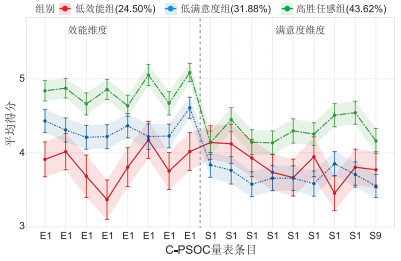
Figures(1) / Tables(6)
Address:No. 287, Changhuai Road, Bengbu, Anhui Province, 233004, P.R.ChinaphoneNo:0552-3066635; 0552-3051890Email:zhqkyx@163.com
Copyright © Chinese Journal of General Practice皖ICP备2020018345号-2
Supported by:
Beijing Renhe Information Technology Co., Ltd.




 DownLoad: